
Technical articles
Technical knowledge for plastic engineers and buyers in Mexico.
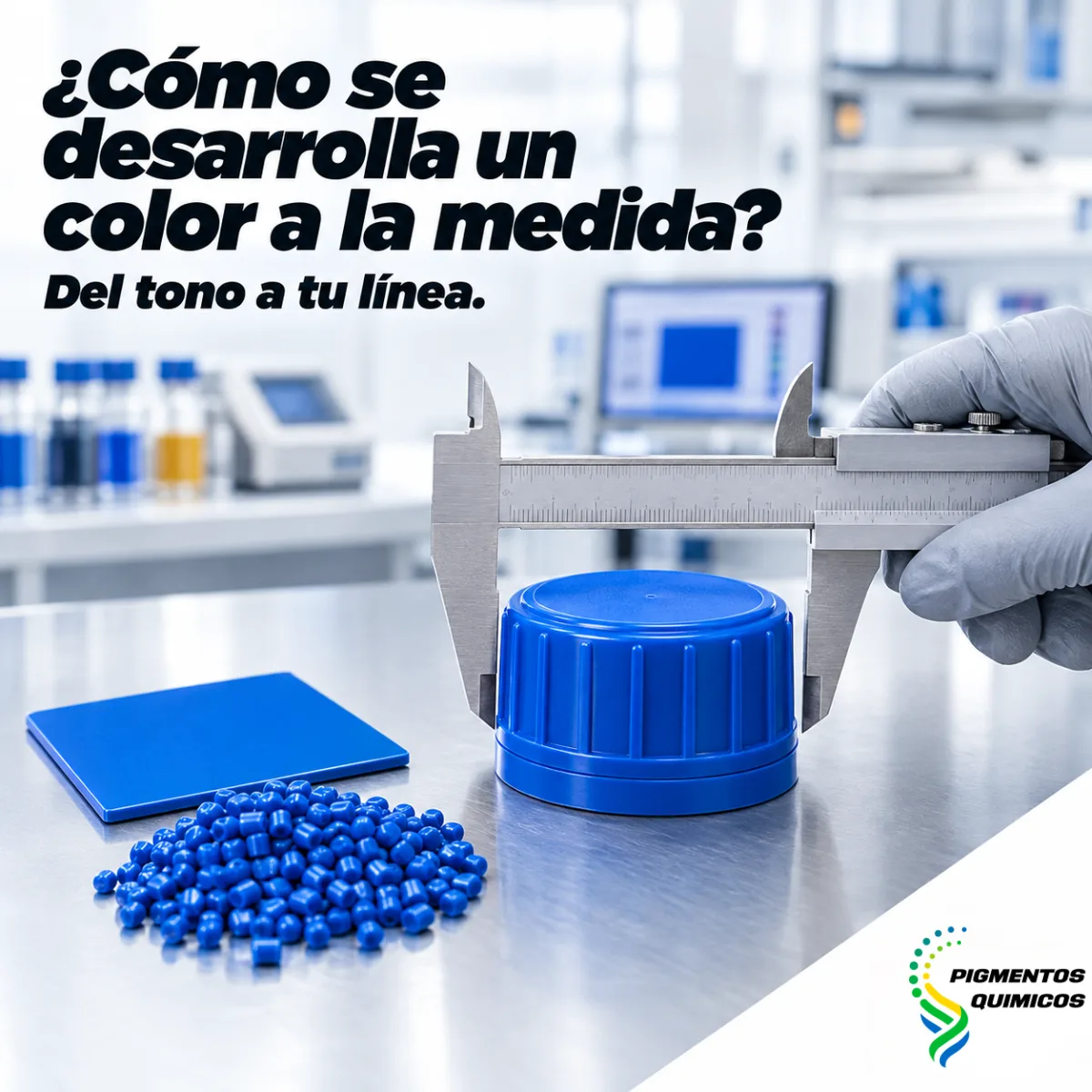
Most plastic resins are combustible by nature. We explain when your part needs flame retardant and what variables define its formulation.
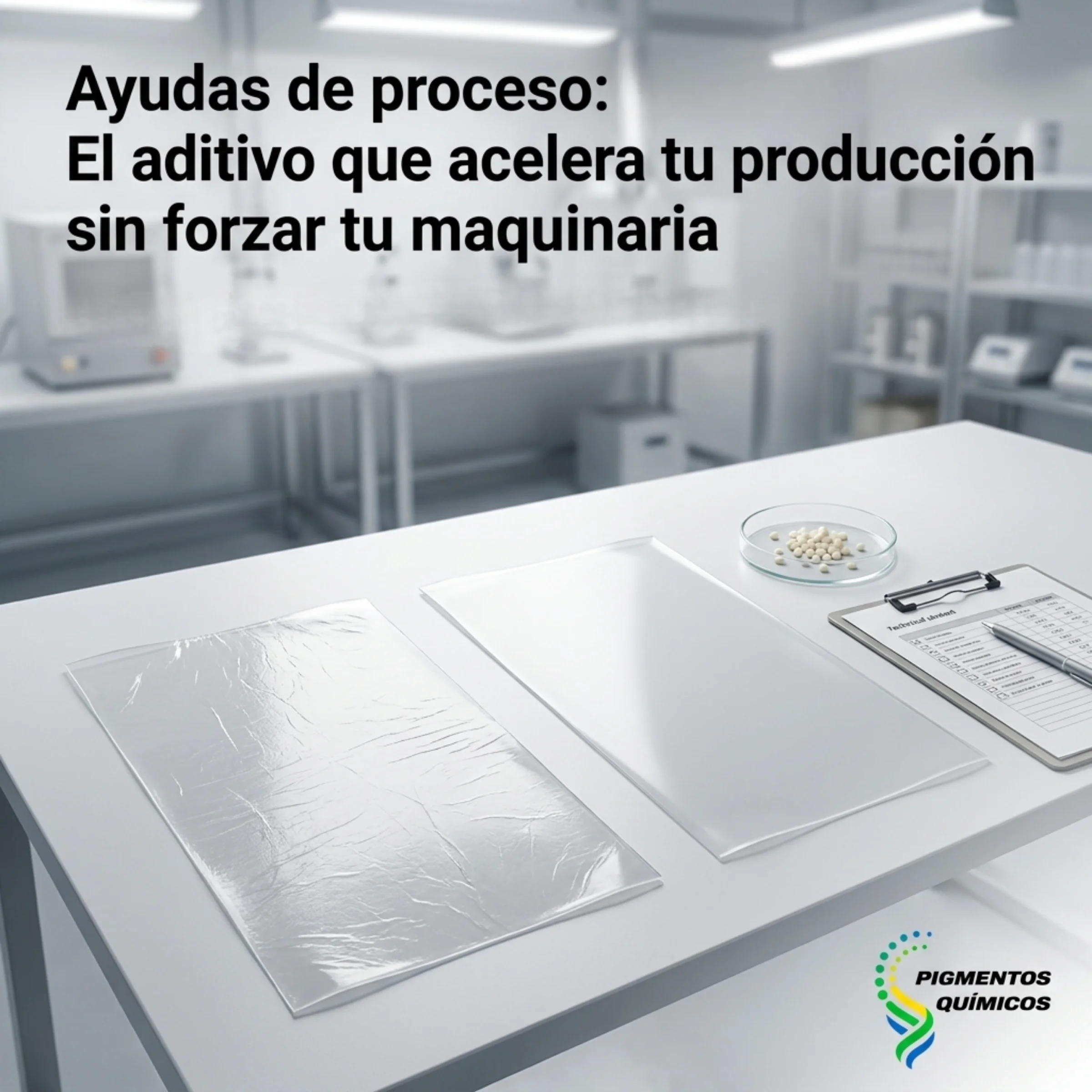
Most plastics generate static electricity by nature. We explain why your part keeps collecting dust and when an antistatic additive makes sense.
The technical answer depends on three variables: the type of biodegradable resin, the processing temperature, and whether the application requires compostability certification. In some cases conventional masterbatch can be processed with biodegradable resins. In others, a masterbatch with a compatible carrier is required.
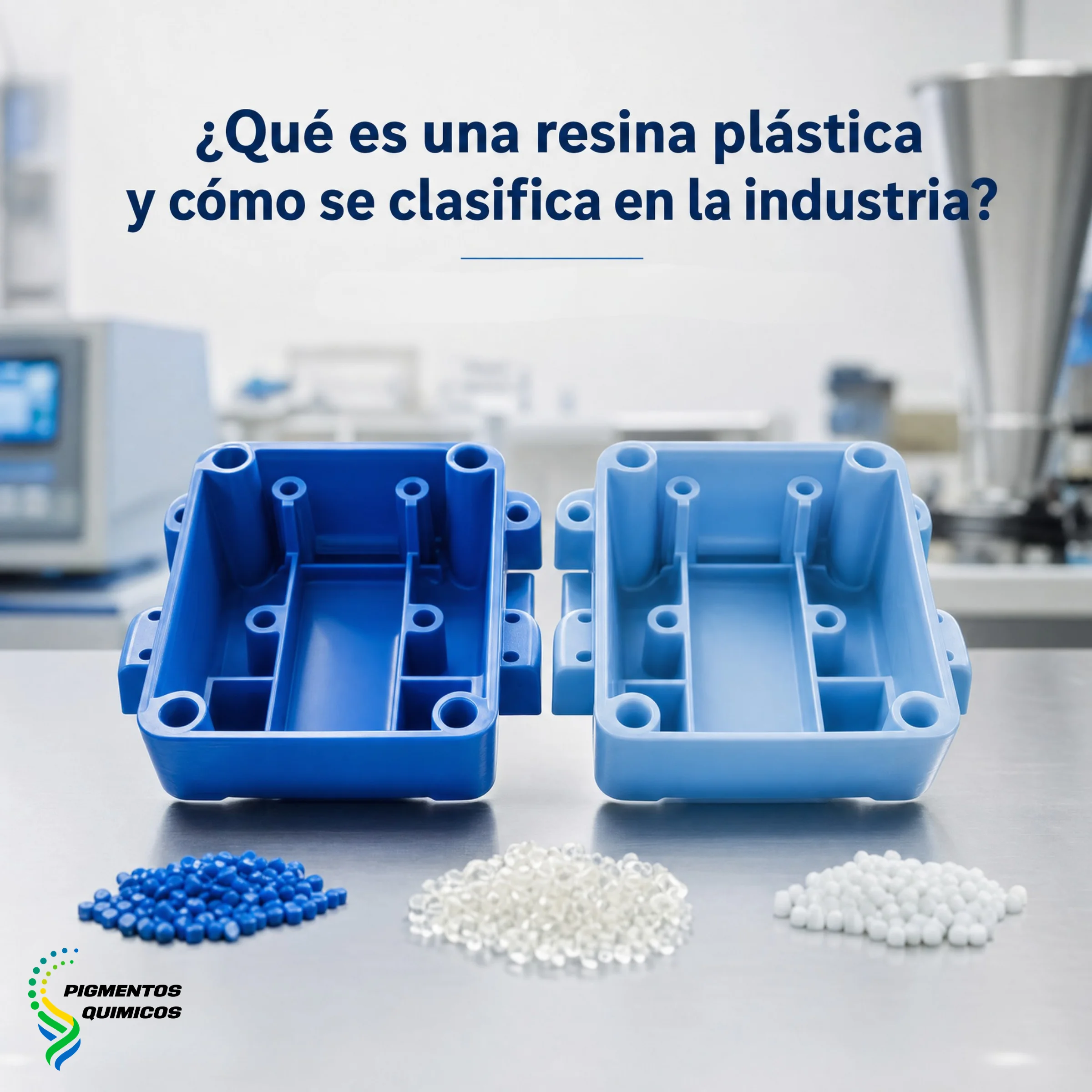
A plastic resin is the polymeric base from which all plastic products are formulated. Its classification defines the transformation process, working temperatures, mechanical properties, and compatibility with masterbatch and additives.
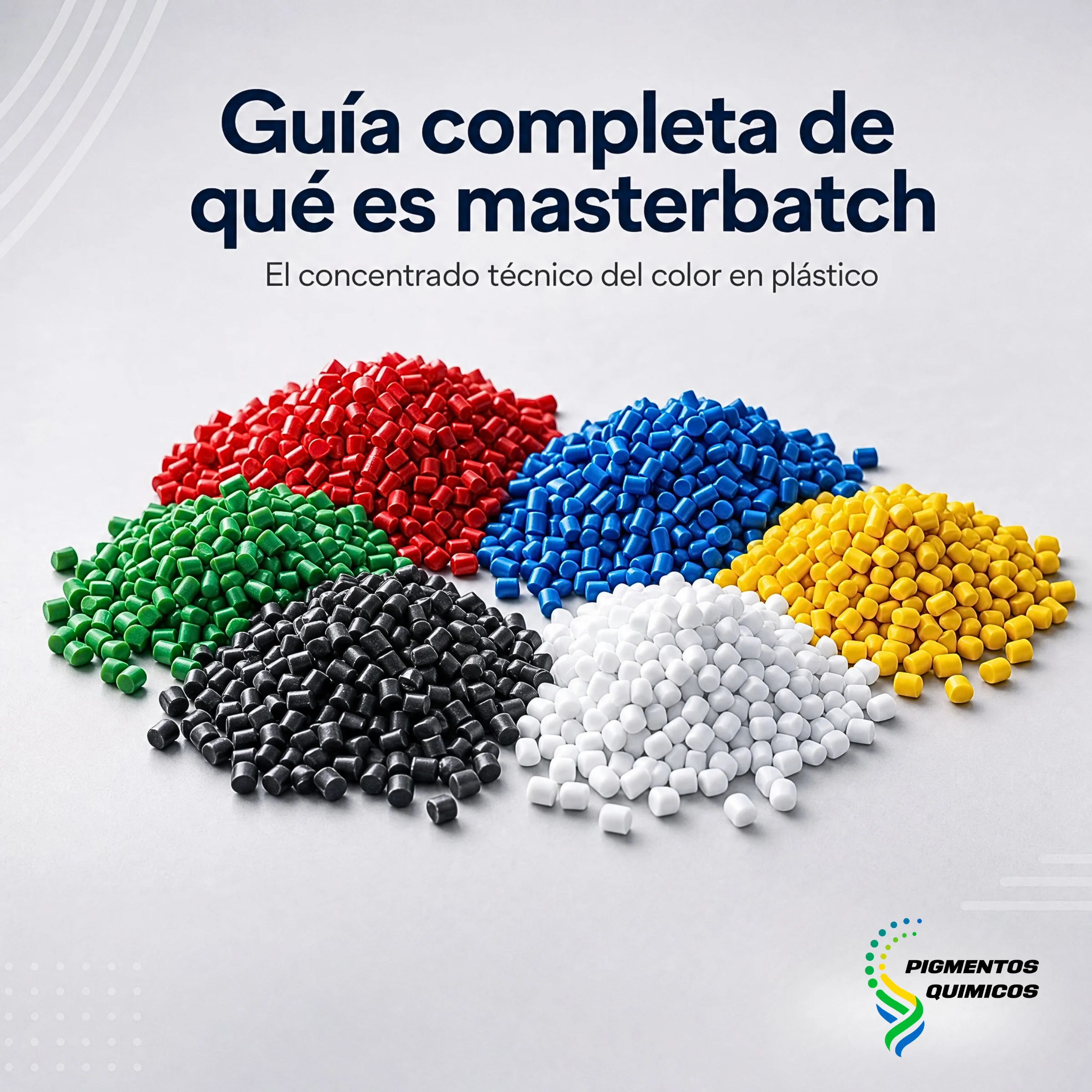
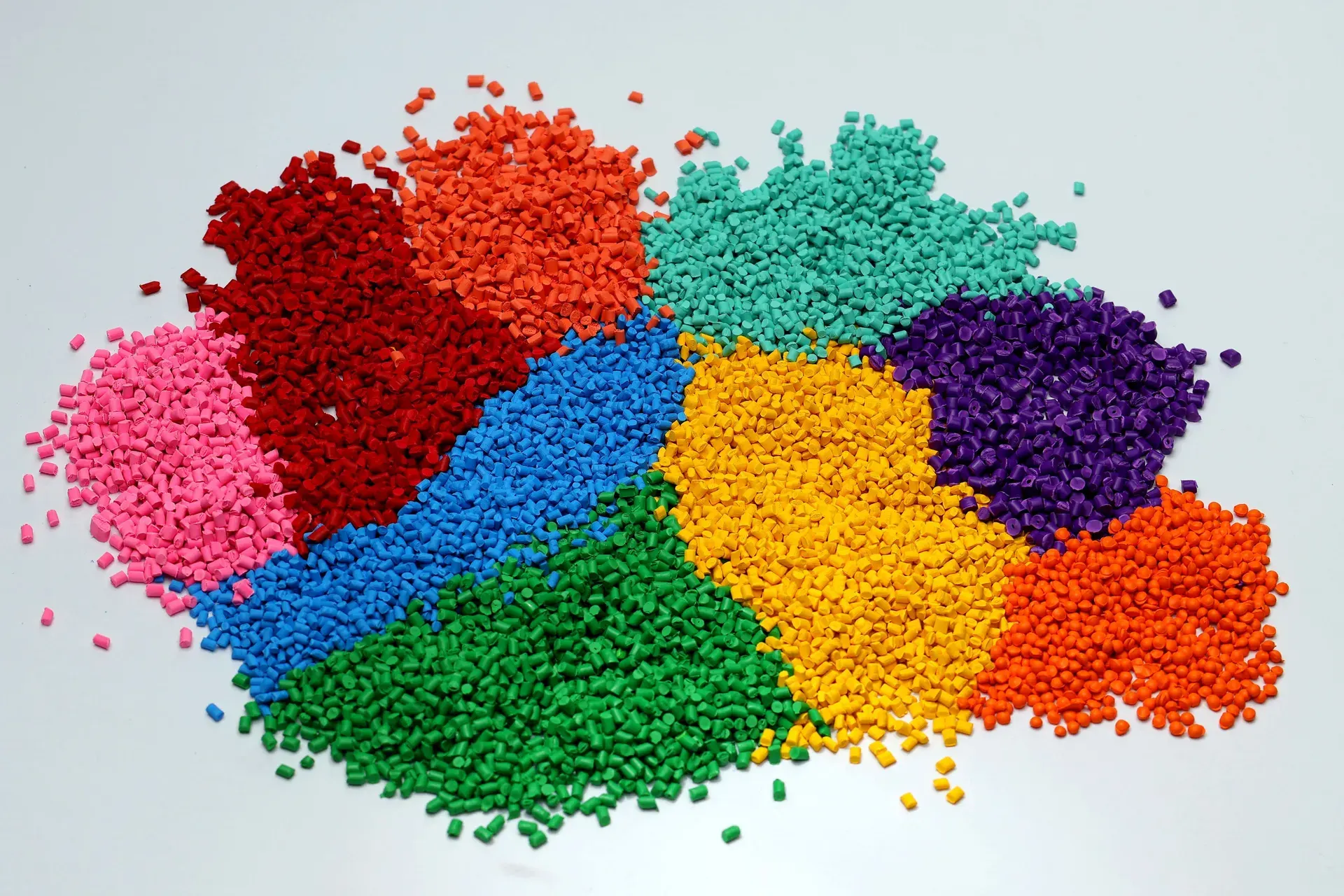
Masterbatch is a concentrate of pigment or additive dispersed in a carrier resin, produced in pellet form. Its performance depends on the resin, the transformation process, and the final application of the product.
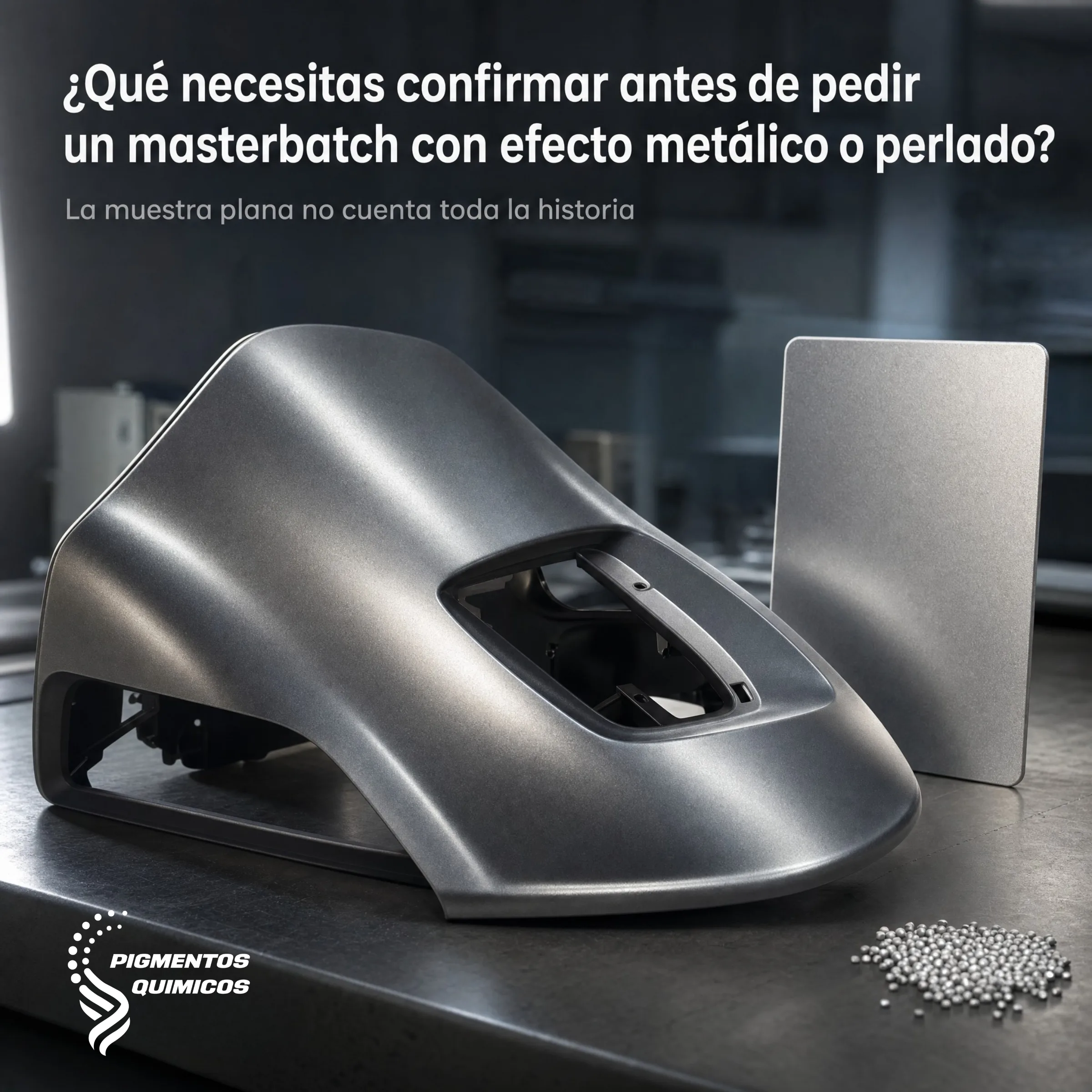
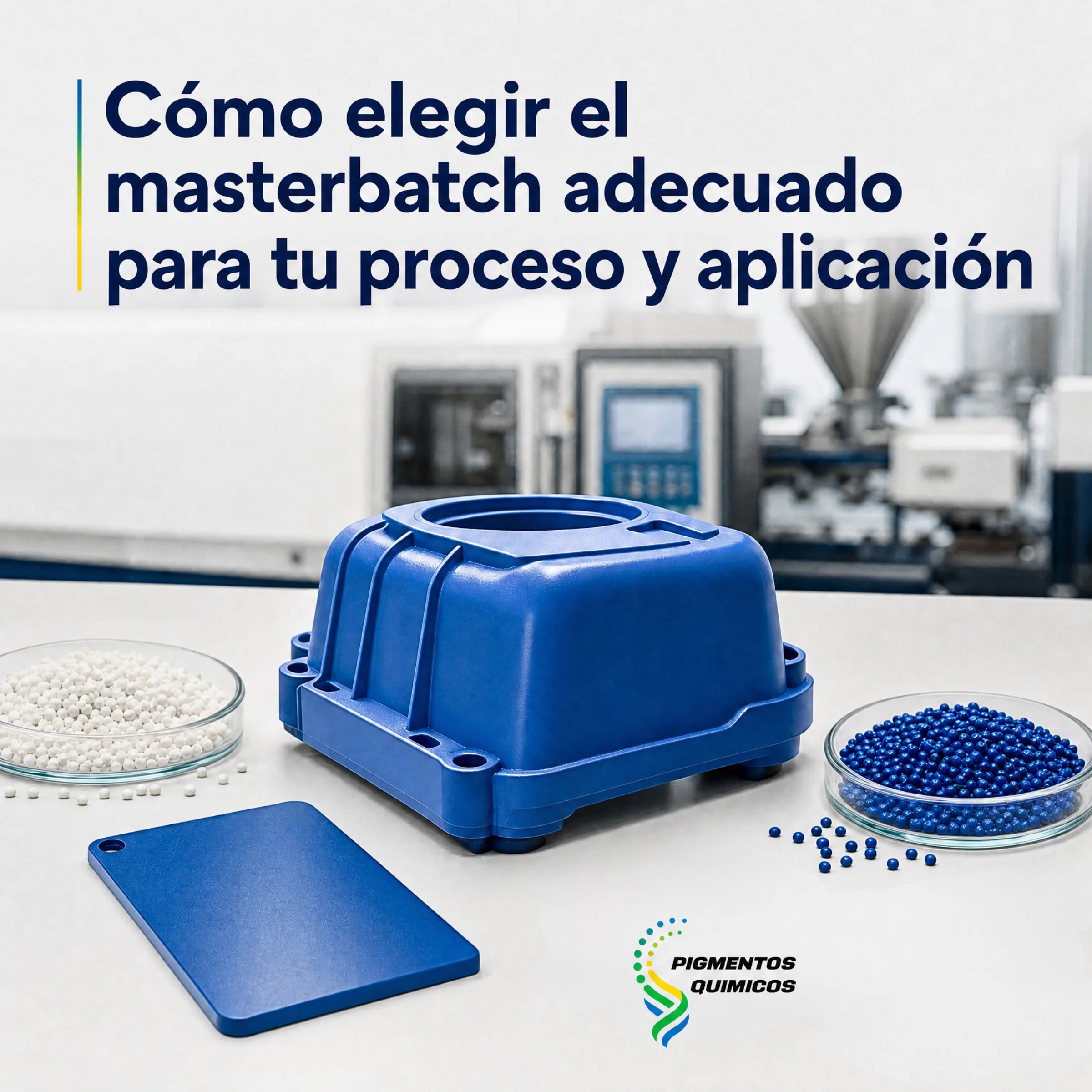
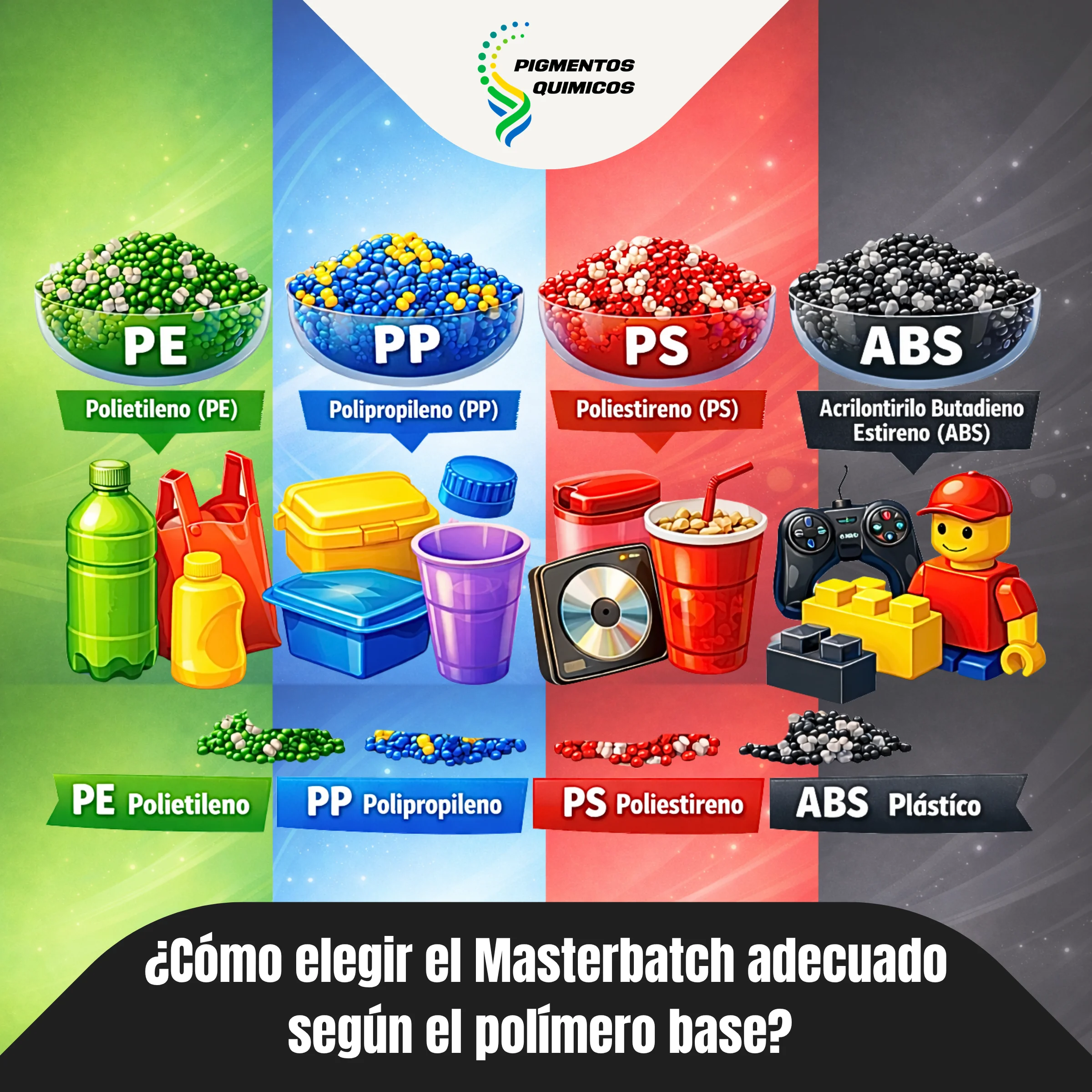
Choosing the right masterbatch requires four inputs before the color: base resin, transformation process, processing temperatures, and the final application of the product.
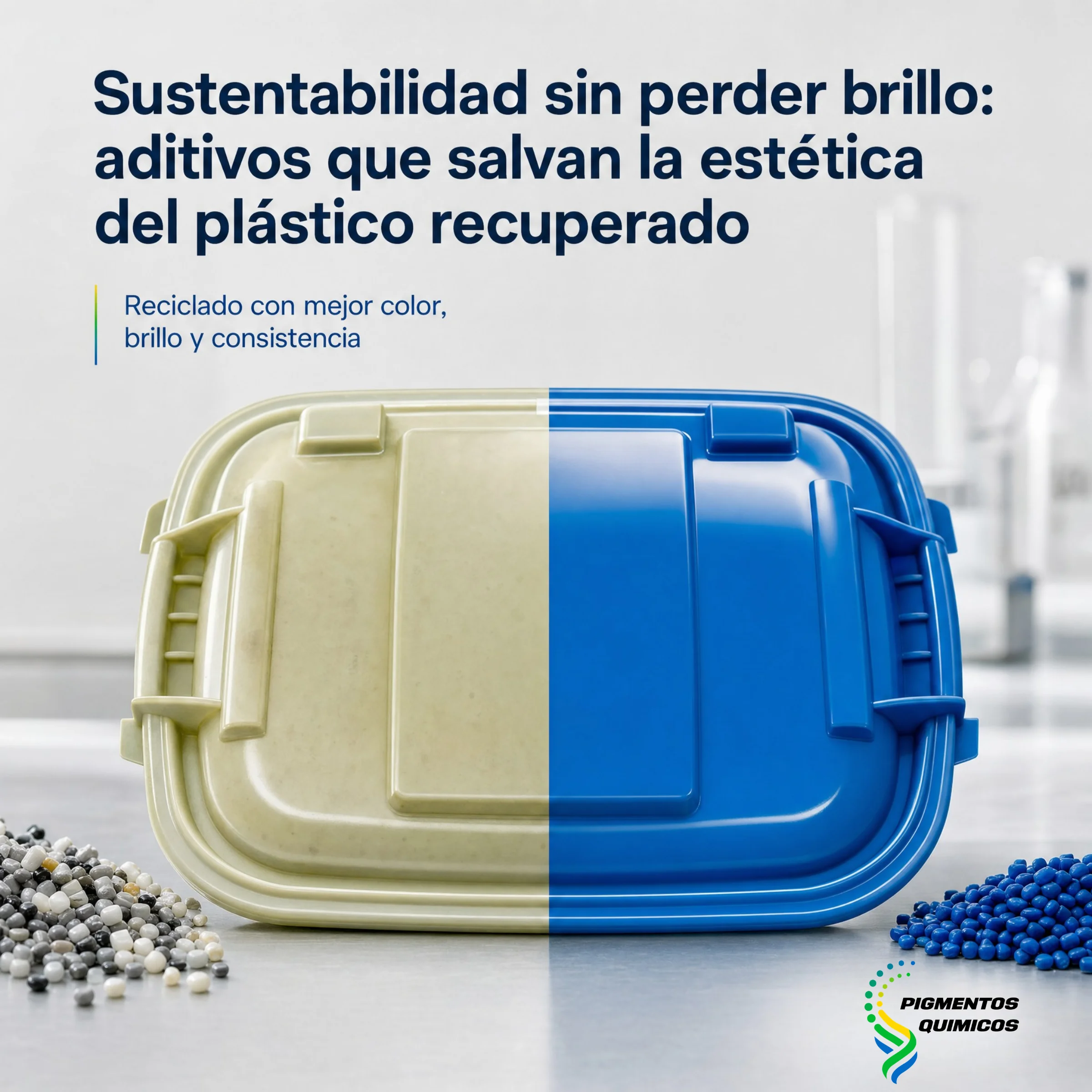
Using recycled plastic should not mean settling for an opaque product or inconsistent color. The challenge is not solved by simply adding more pigment either. There are additive categories that, used with clear criteria, help recover both appearance and performance.
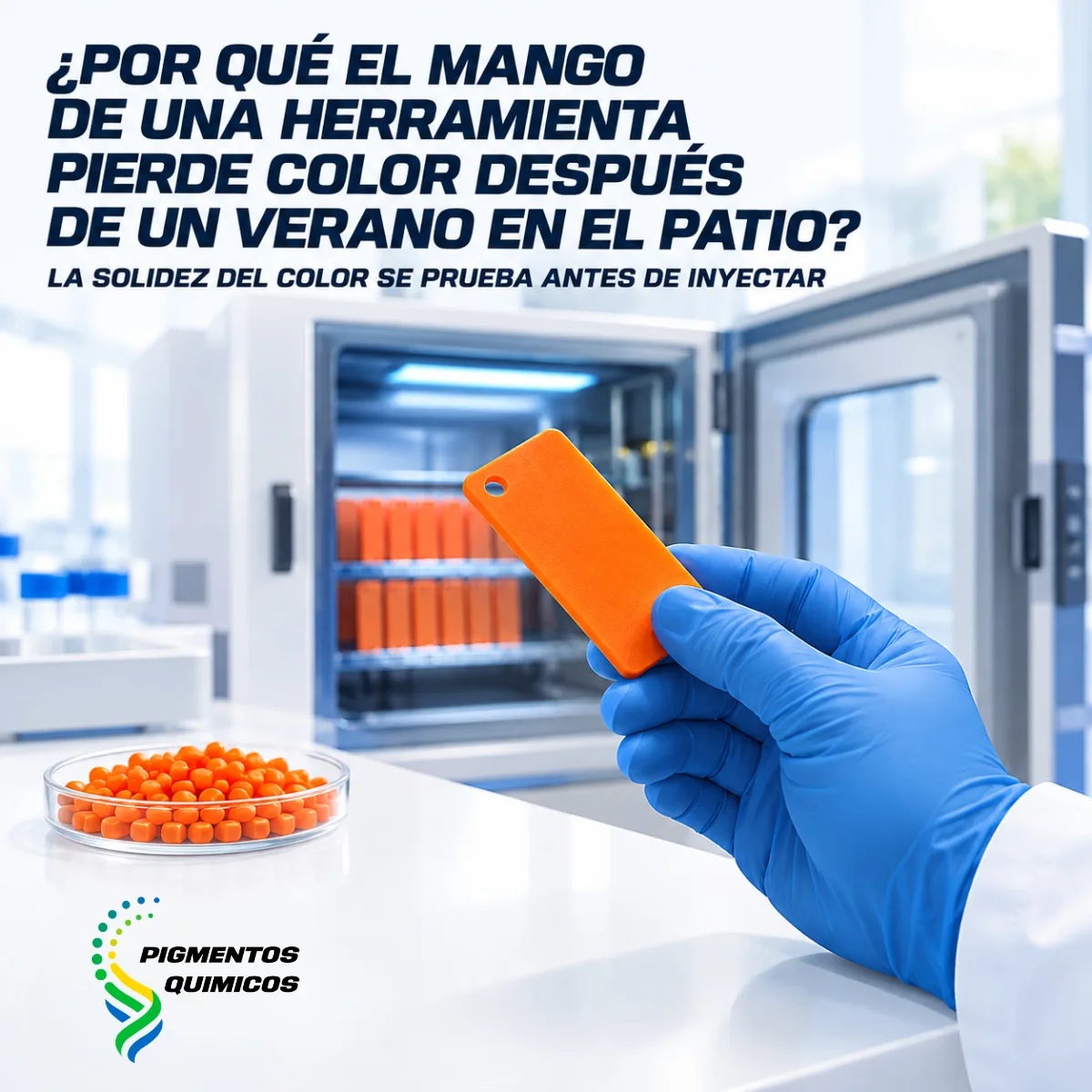
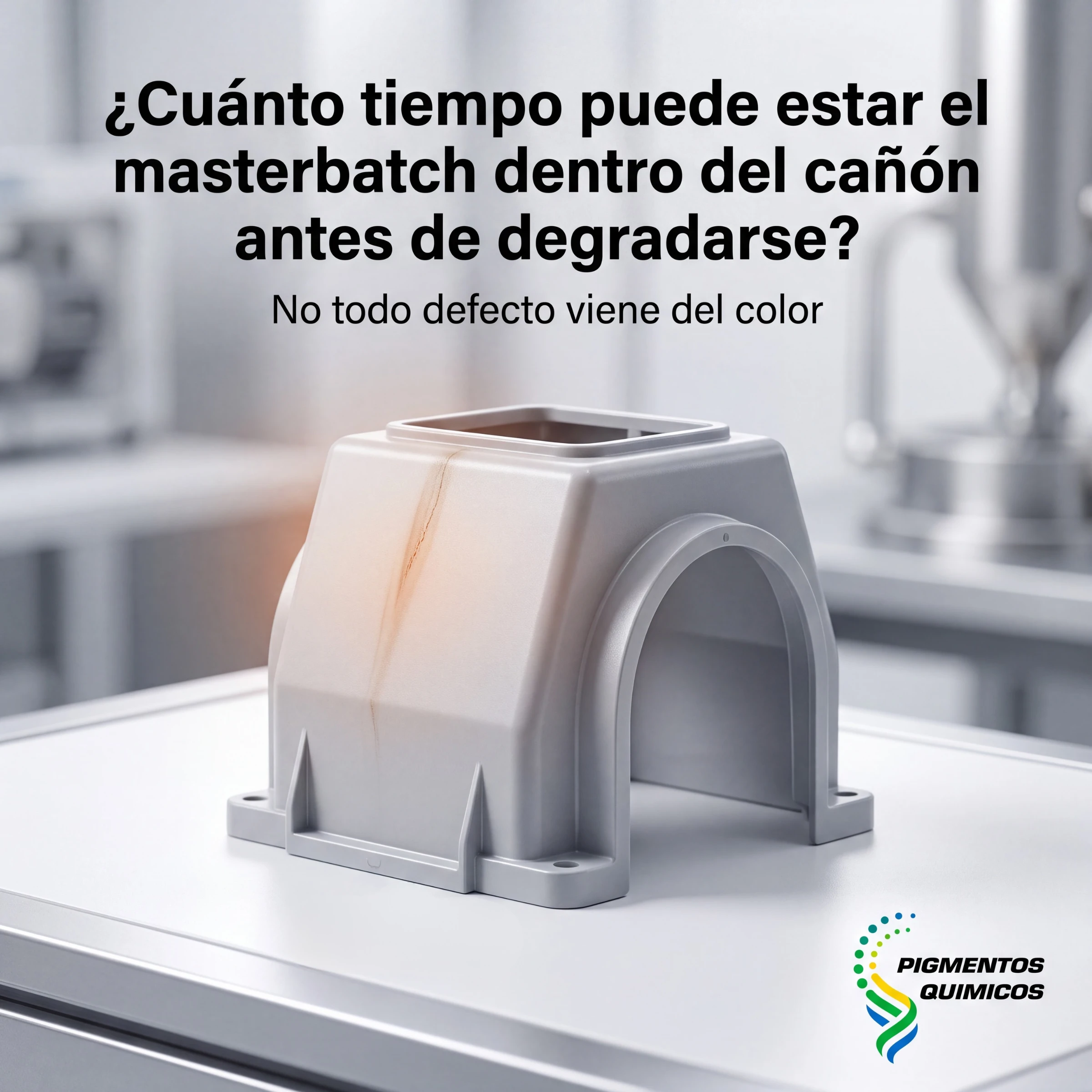
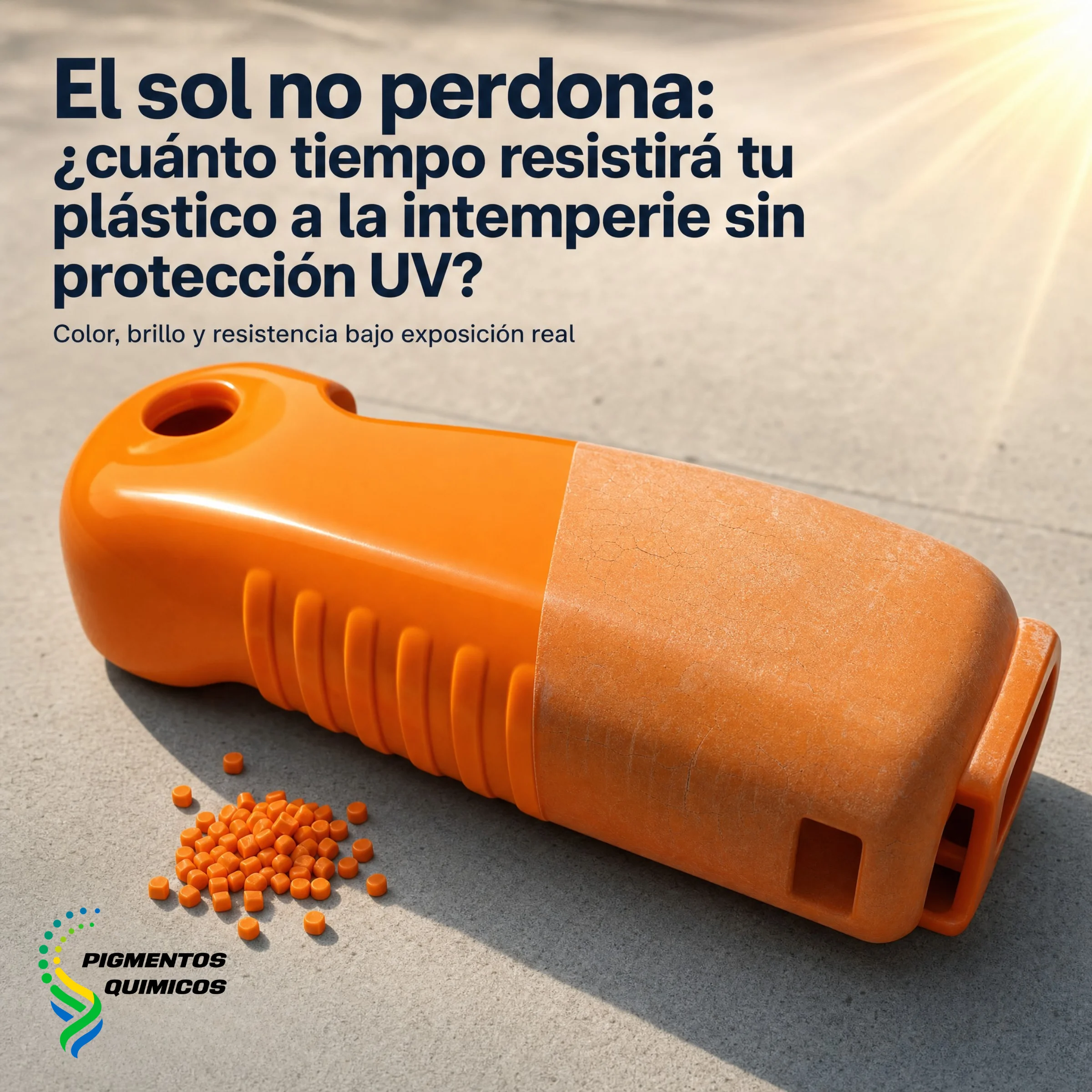
There is no single answer. A plastic part can start discoloring in weeks or hold up for years, depending on the resin, pigment, wall thickness, and exposure conditions. What does exist are the variables that determine that difference.
Process aids are additives that reduce melt friction against equipment, improve surface finish, and can lower line pressure. They do not fix structural process problems, but in the right context they make a measurable difference.
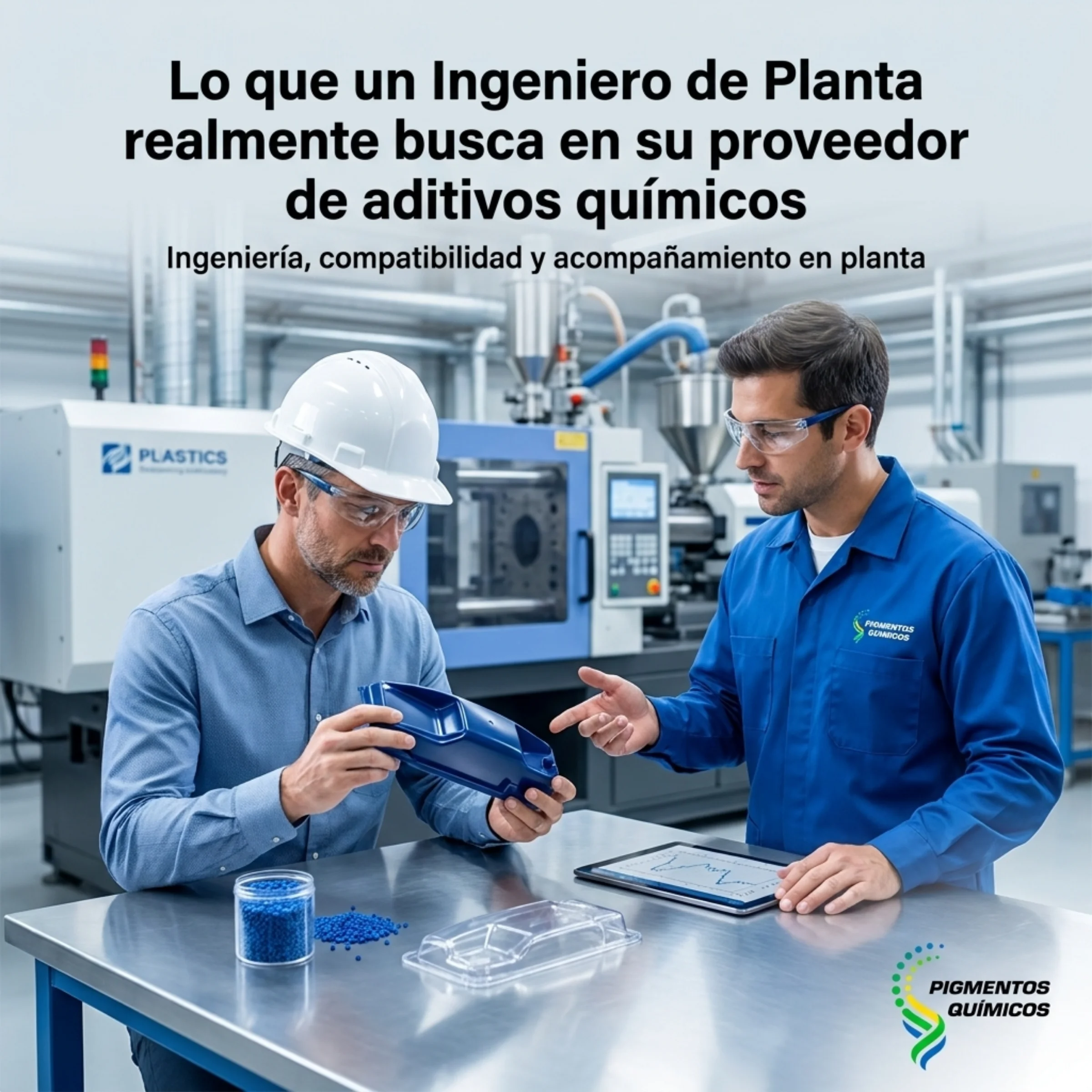
There is a gap between what a supplier believes a Plant Engineer needs and what that engineer actually evaluates. Compatibility, traceability, and real technical support are the criteria that define the decision.
Thinner walls mean greater challenges for uniform coverage. Learn the pigment, dosing, and dispersion variables that determine opacity in thin-wall plastics.
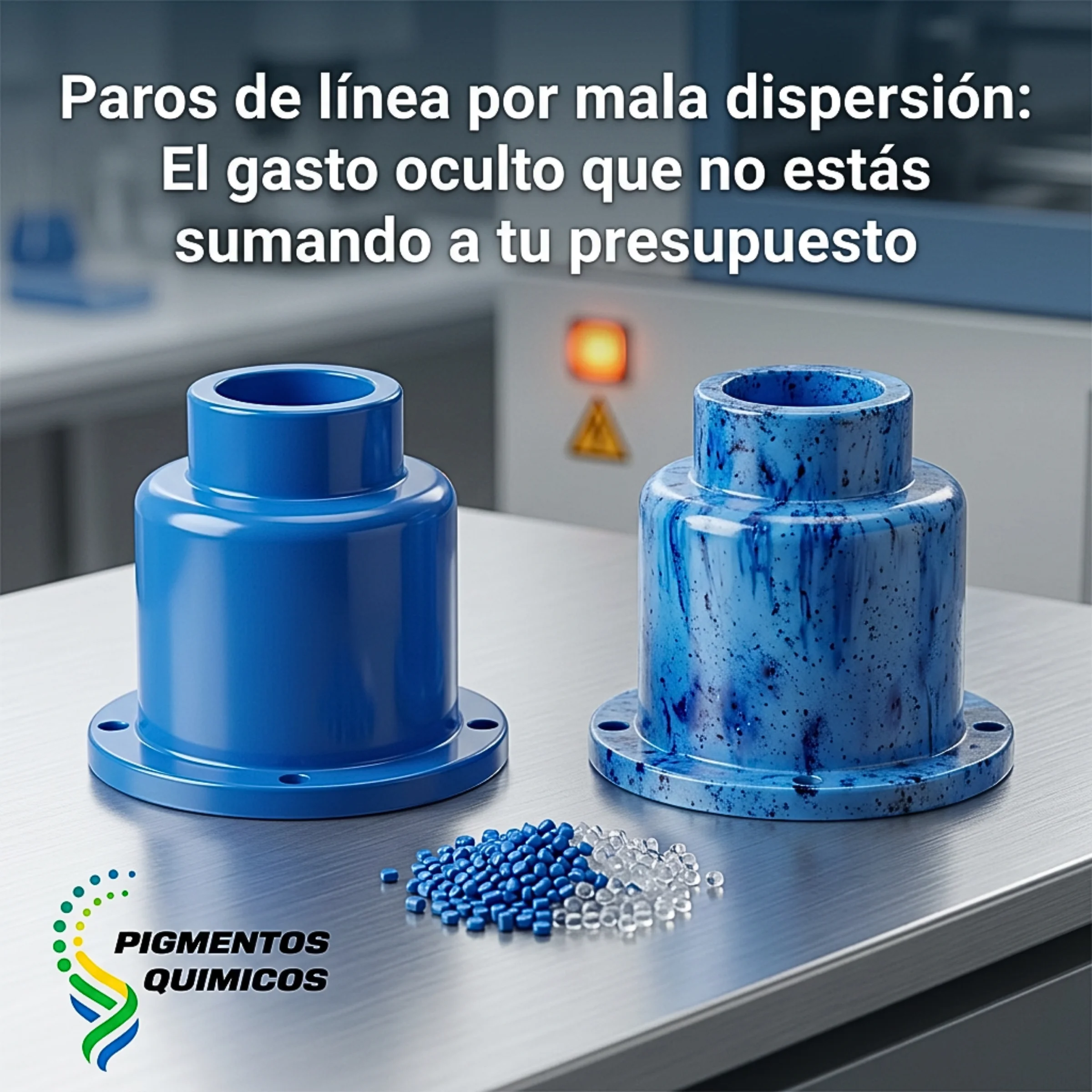
Poor masterbatch dispersion causes streaks, spots, and color variations that lead to line stoppages and rework. Learn how to diagnose and prevent it.
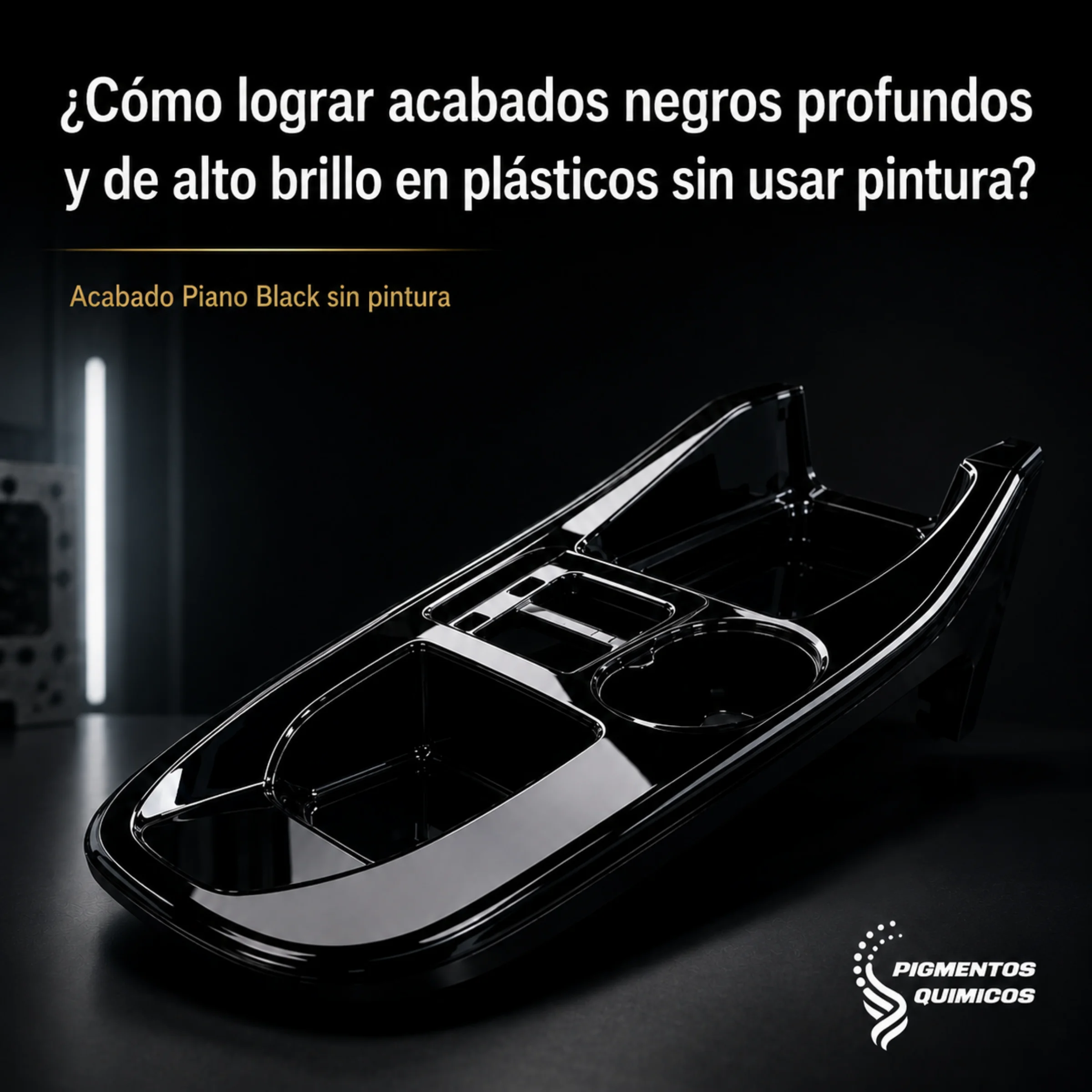
Three technological routes —high-gloss resins, variotherm control, and IMD— deliver high-gloss black without a single coat of paint, eliminating VOC and painting booth costs.
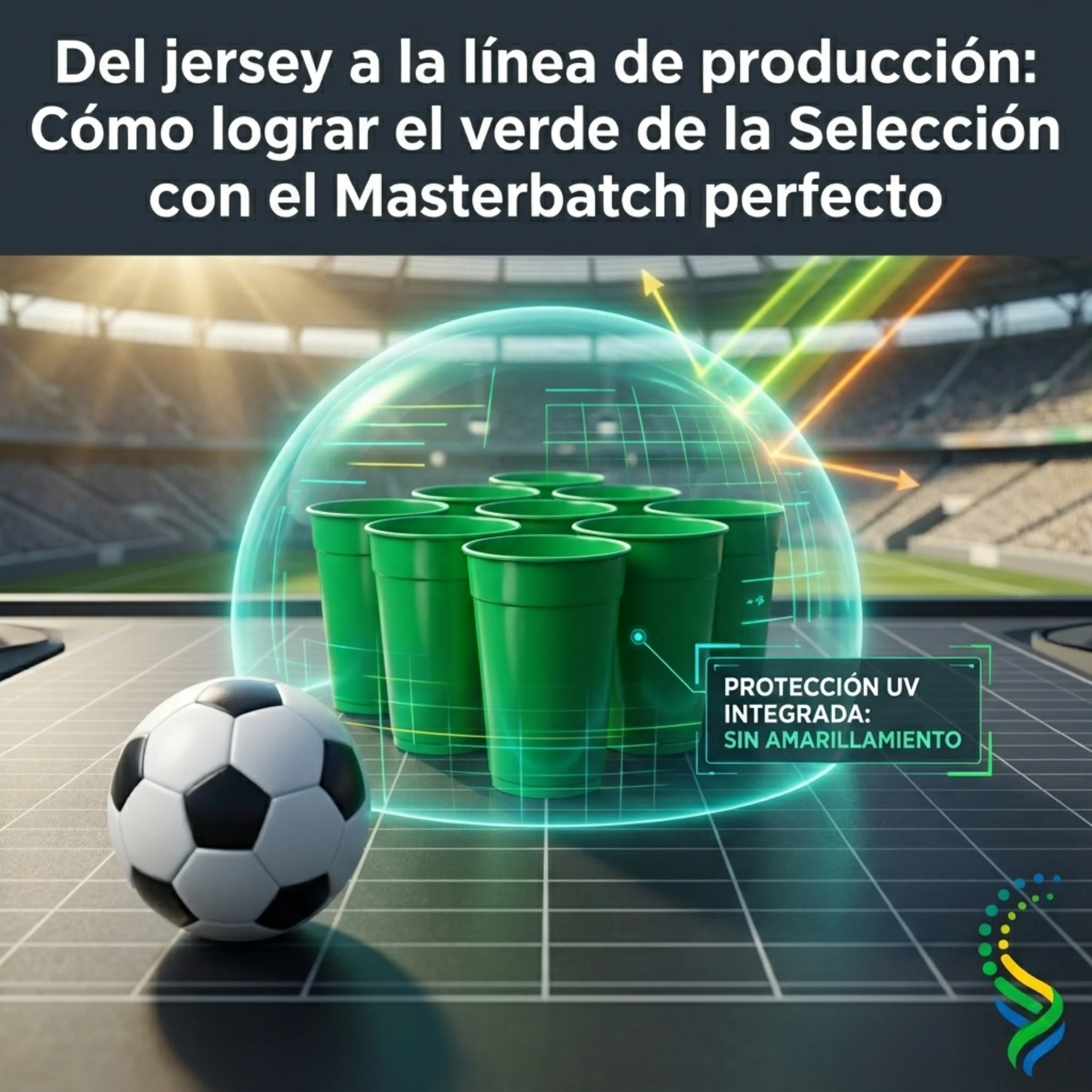
Reproducing Mexico's national team green in plastic demands spectrophotometric control, Delta E below 1.0, and a pigment formulation validated for each resin and process.
Green for outdoor sports infrastructure requires high-fastness pigments, second-generation HALS, and ASTM G155 validation. An incorrect formulation triggers penalty clauses.
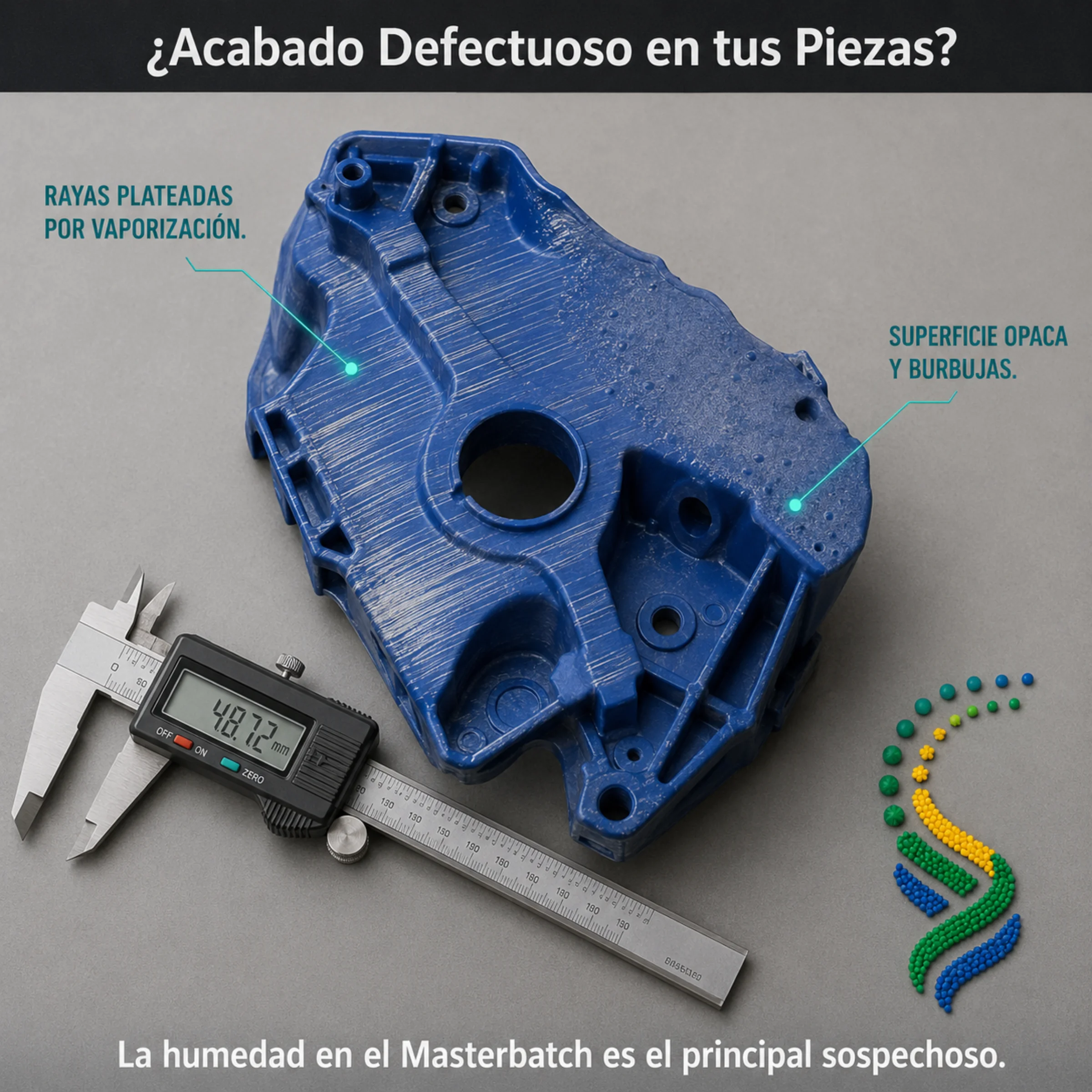
Bubbles, silver streaks, and irregular finishes can share a common cause: moisture in the masterbatch. Learn to identify, prevent, and protect your production.
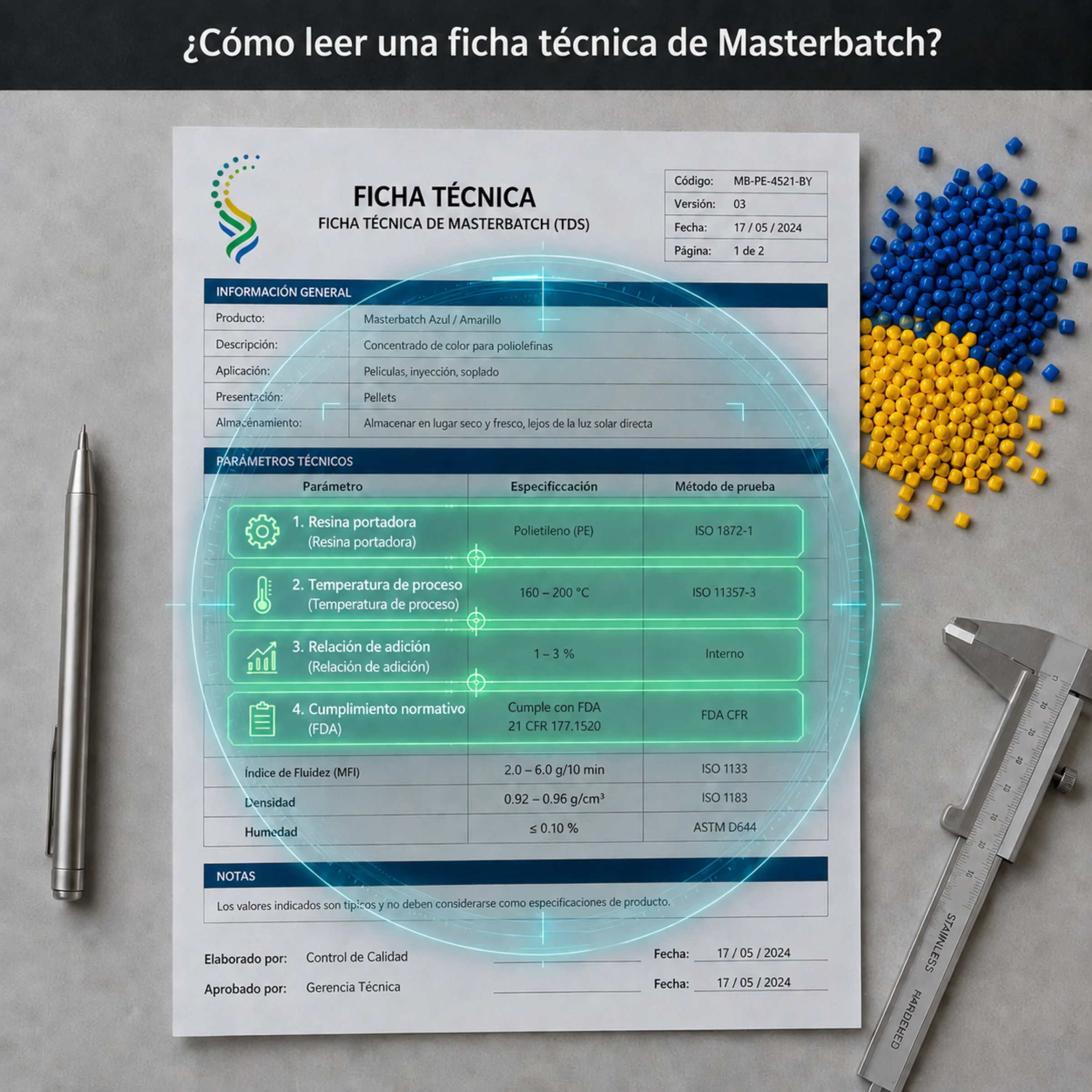
The Masterbatch datasheet contains your process's first quality control checkpoint. Knowing how to read the carrier, pigment concentration, temperature range, and compliance declarations prevents costly rejects.
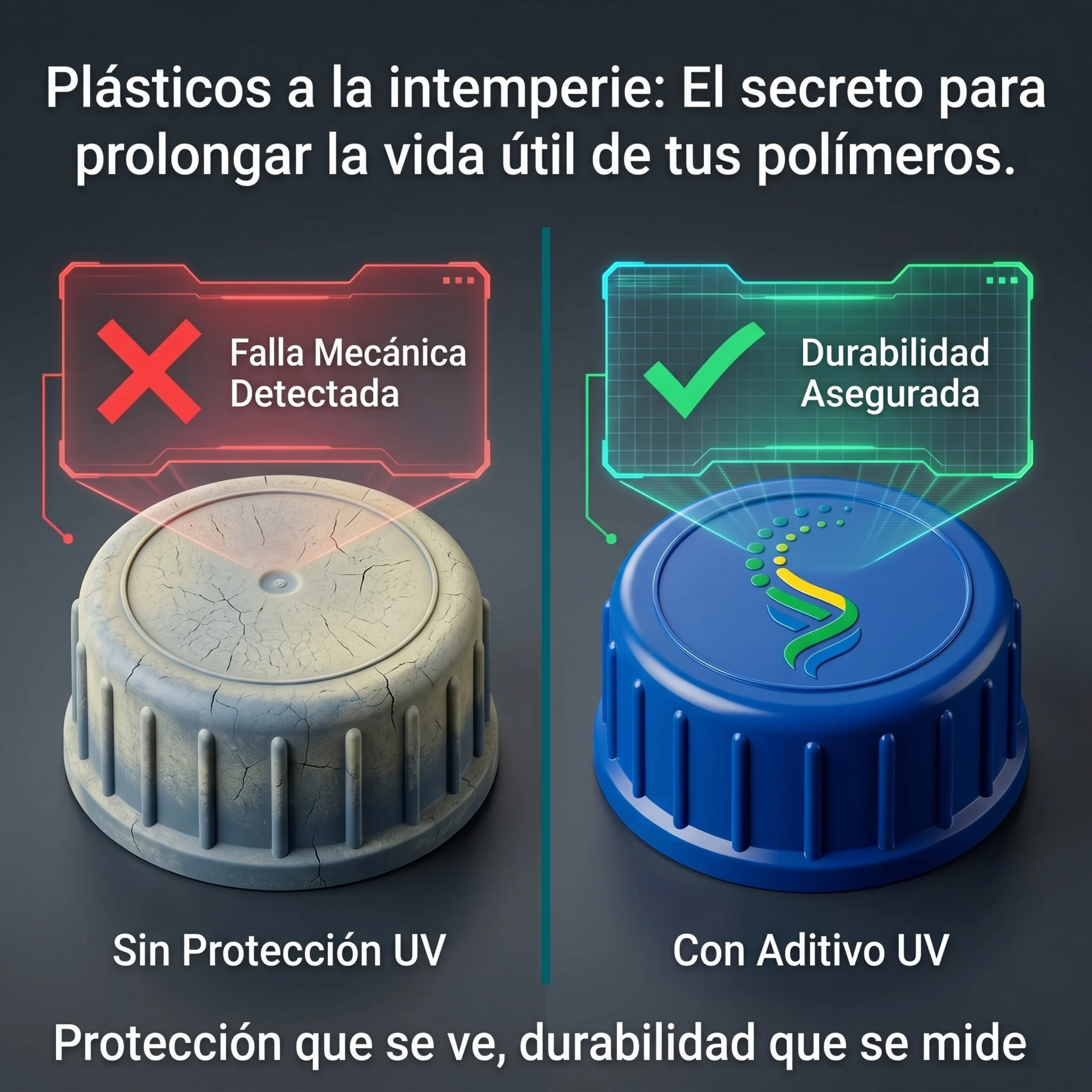
UV radiation, heat, and humidity degrade polymers outdoors. Learn the key technical strategies and additives —HALS, UV absorbers, and carbon black— to protect your plastics.
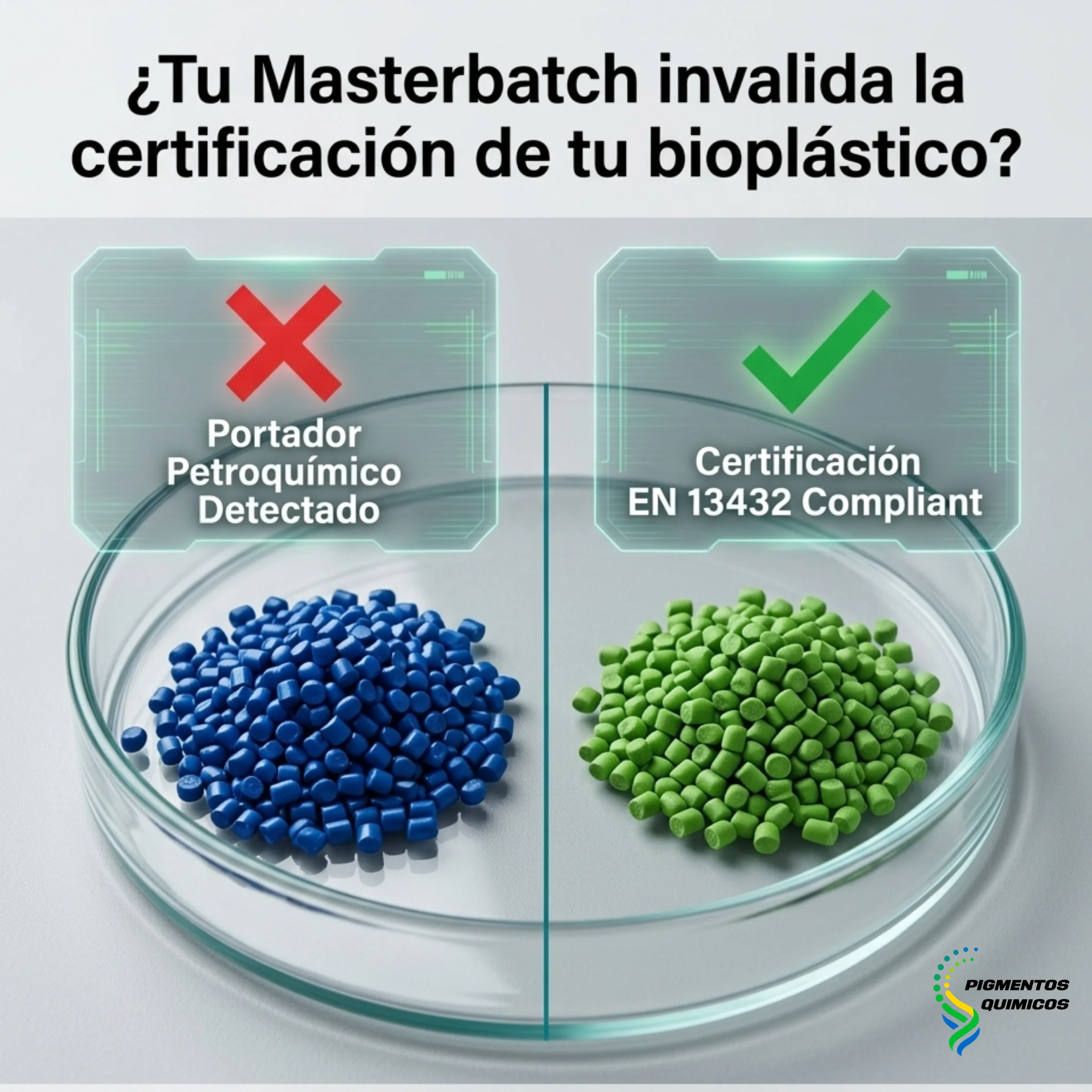
Warning: using non-biodegradable carriers in your masterbatch can void the compostable certification of your final product.
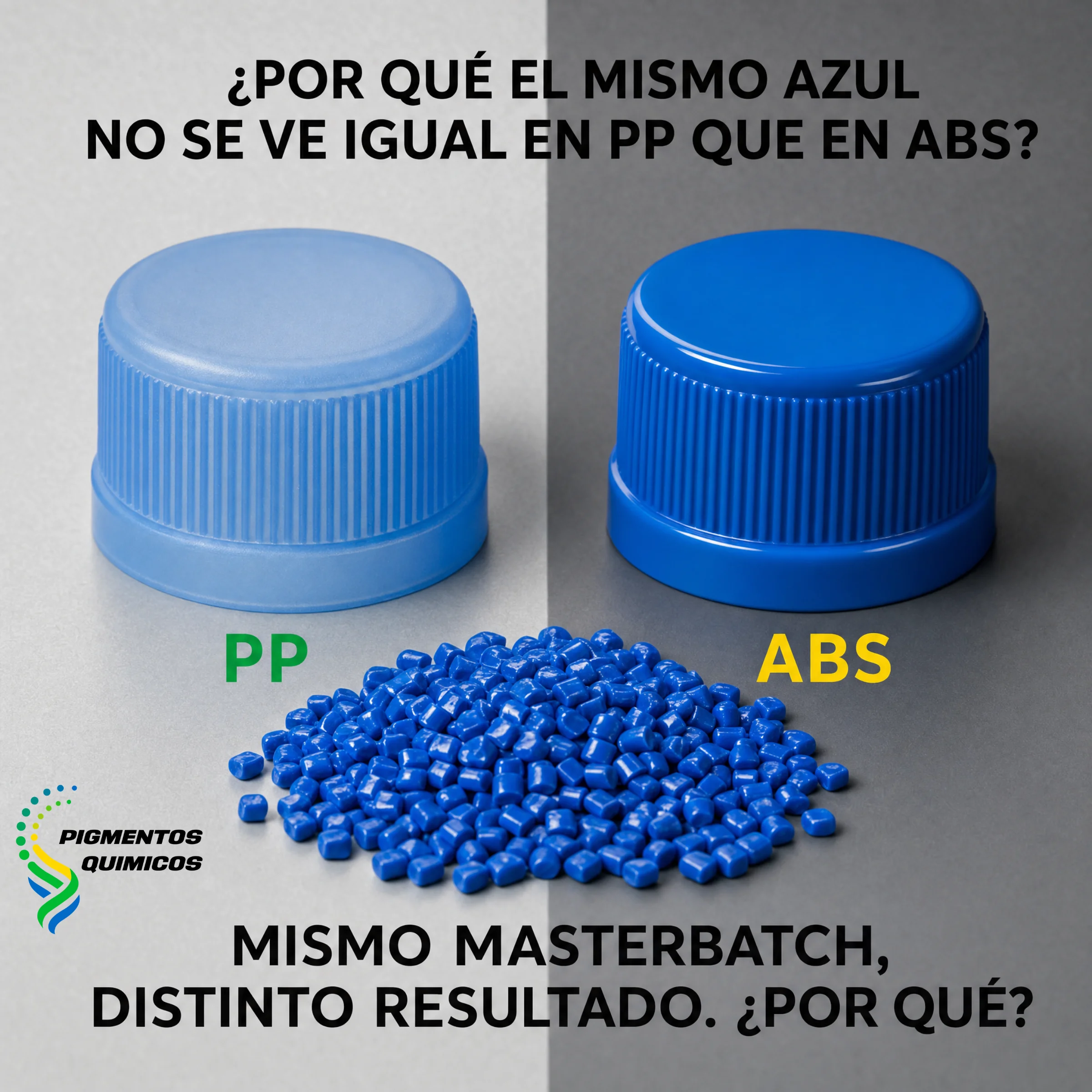
The same blue masterbatch produces different shades in PP and ABS. The physics behind it: refractive index, crystallinity, and processing temperature determine the final color.
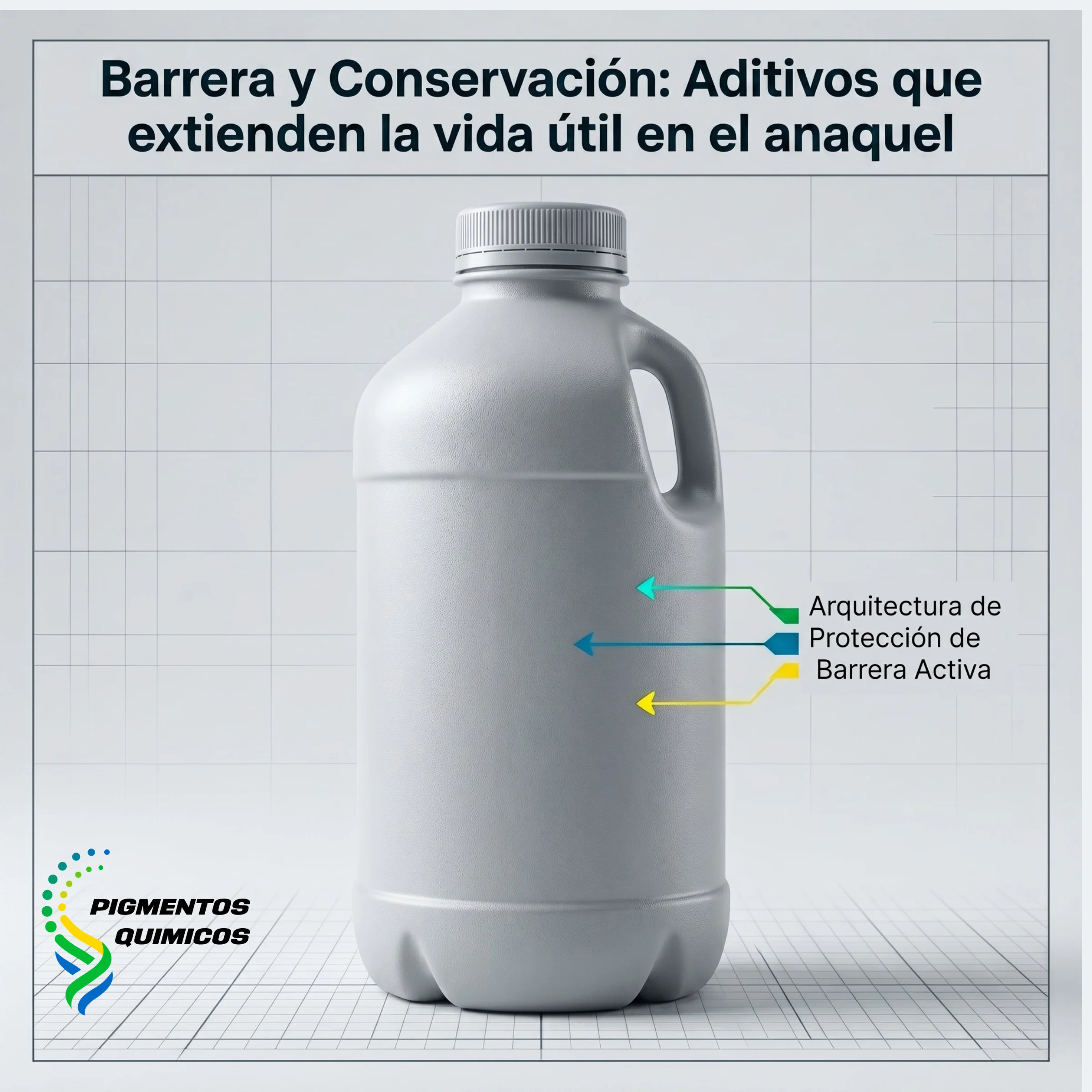
EVOH, oxygen scavengers, antioxidants, and inorganic coatings reduce packaging permeability and can triple product shelf life without altering its safety.
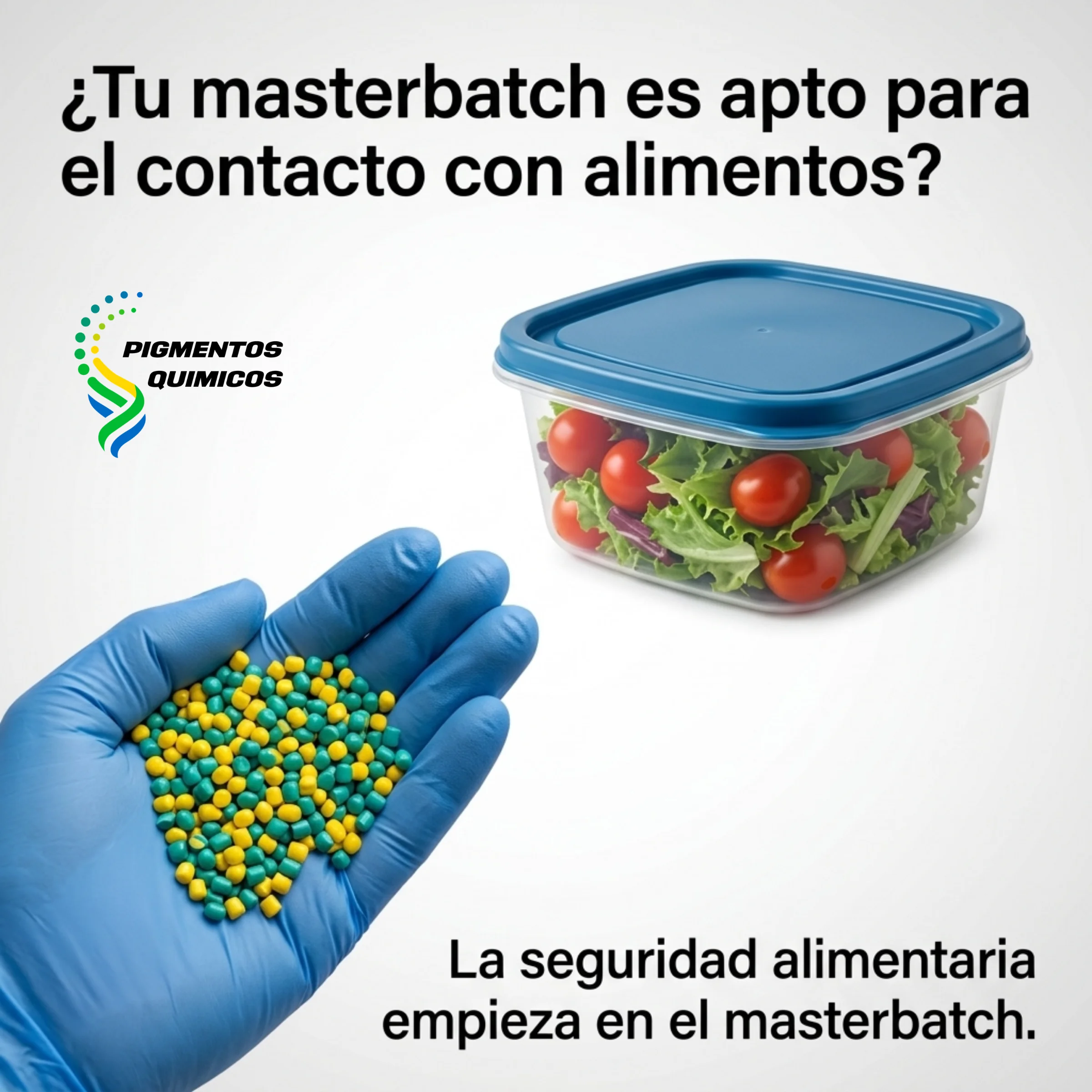
A masterbatch is suitable for food contact when its pigments, carrier, and additives are authorized under EU Regulation 10/2011 and FDA 21 CFR, and carries a current Declaration of Conformity.
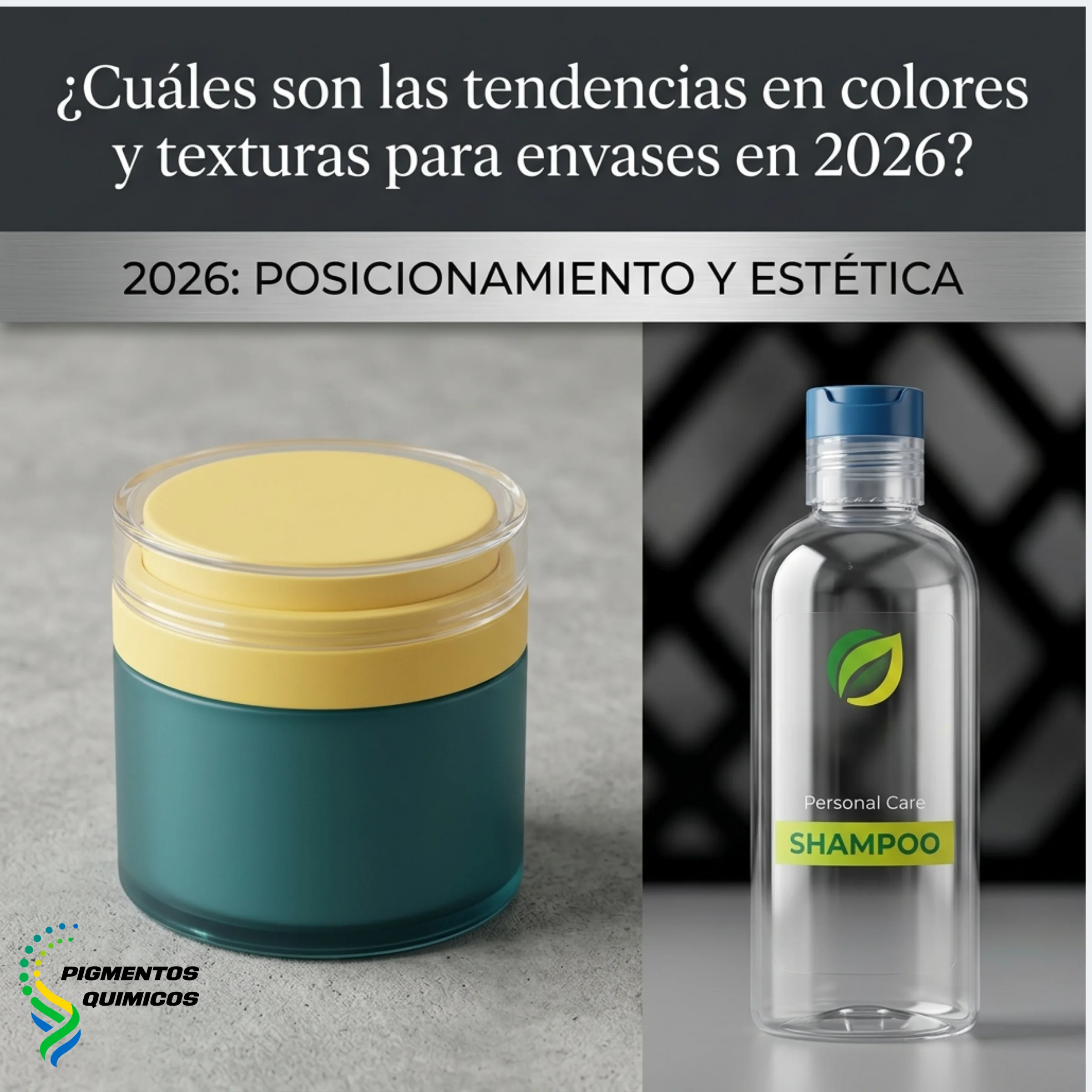
In 2026, plastic packaging moves toward mineral palettes, soft touch finishes from masterbatch, functional rPET transparencies, and formulations that communicate sustainability from the resin.
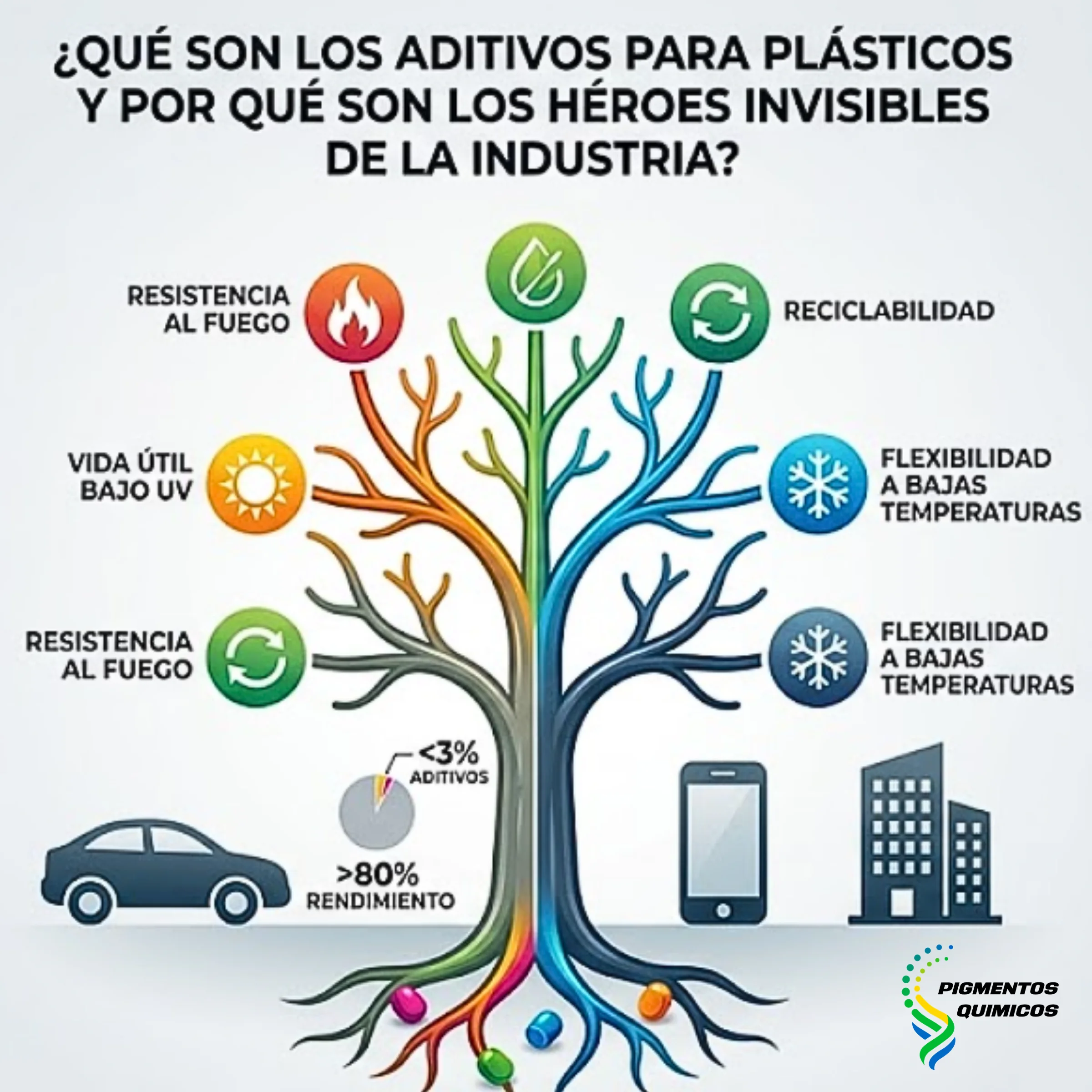
Plastic additives are the compounds that transform a generic resin into a material that resists heat, weather, fire, or bacteria. The global additives market exceeds $57 billion.
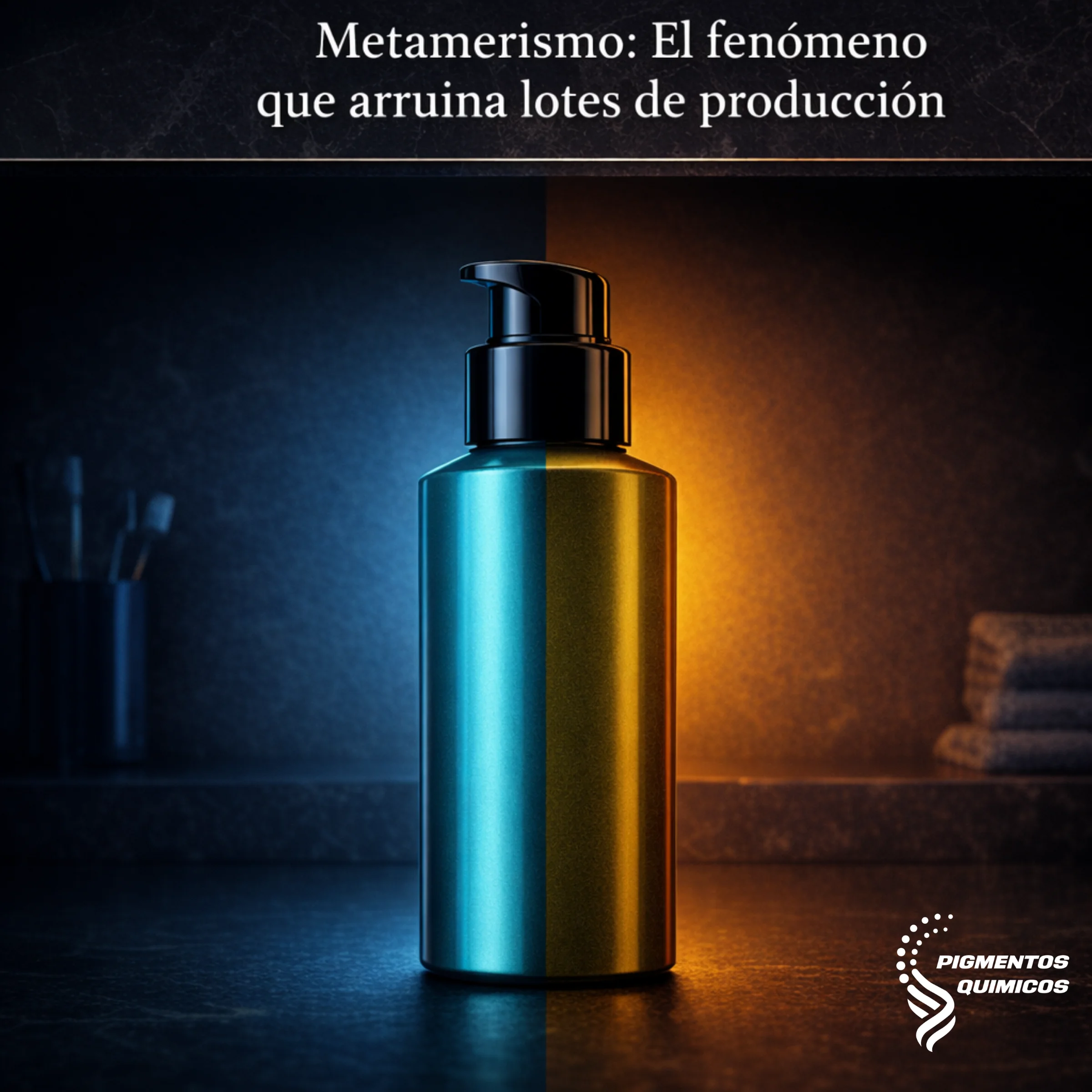
Two parts with the same masterbatch look identical under plant lighting and completely different under natural light. That is metamerism, and it causes full batch rejections in the plastics industry.
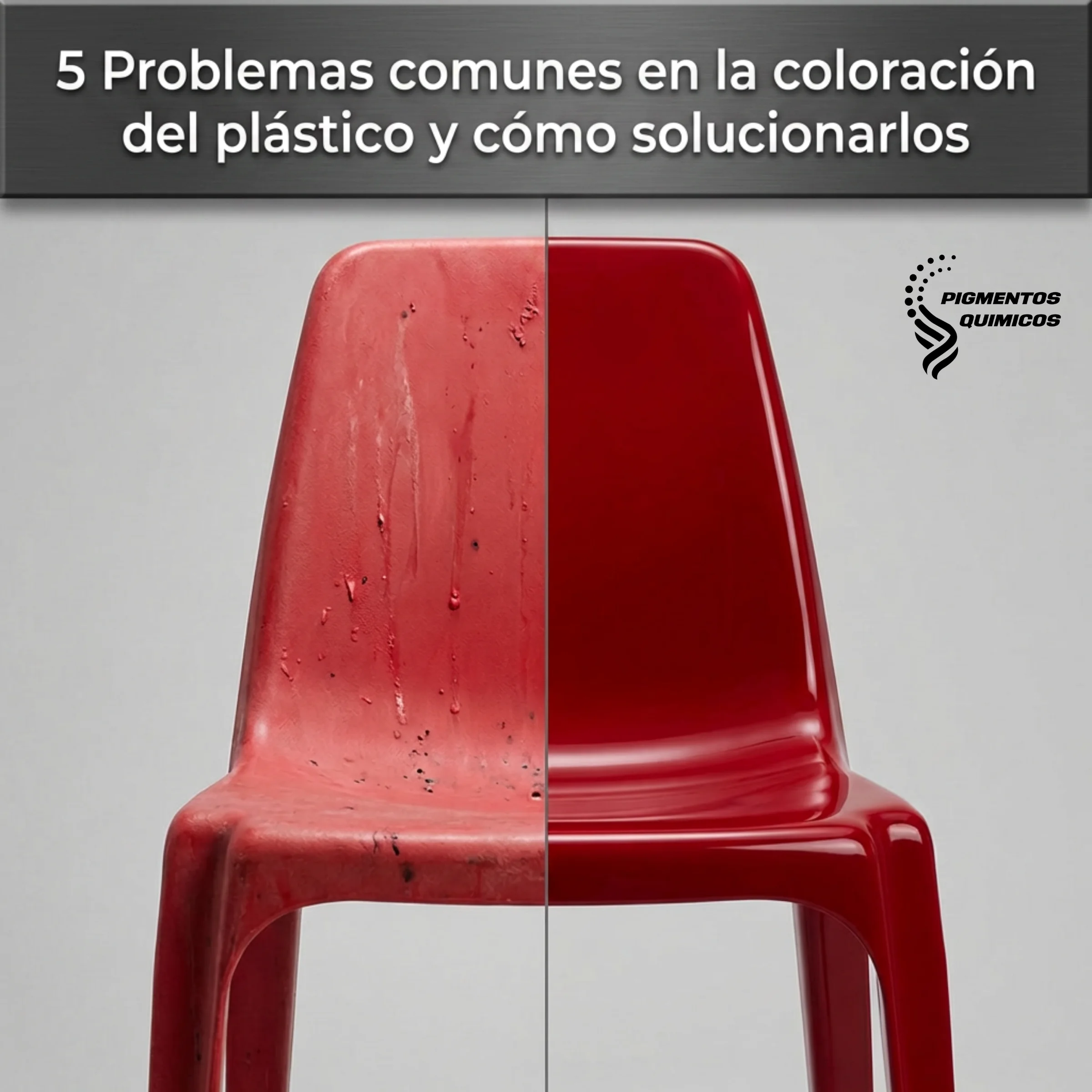
Poor dispersion, thermal degradation, migration, batch inconsistency, and UV discoloration: the five most frequent problems in plastic coloring and their technical solutions.
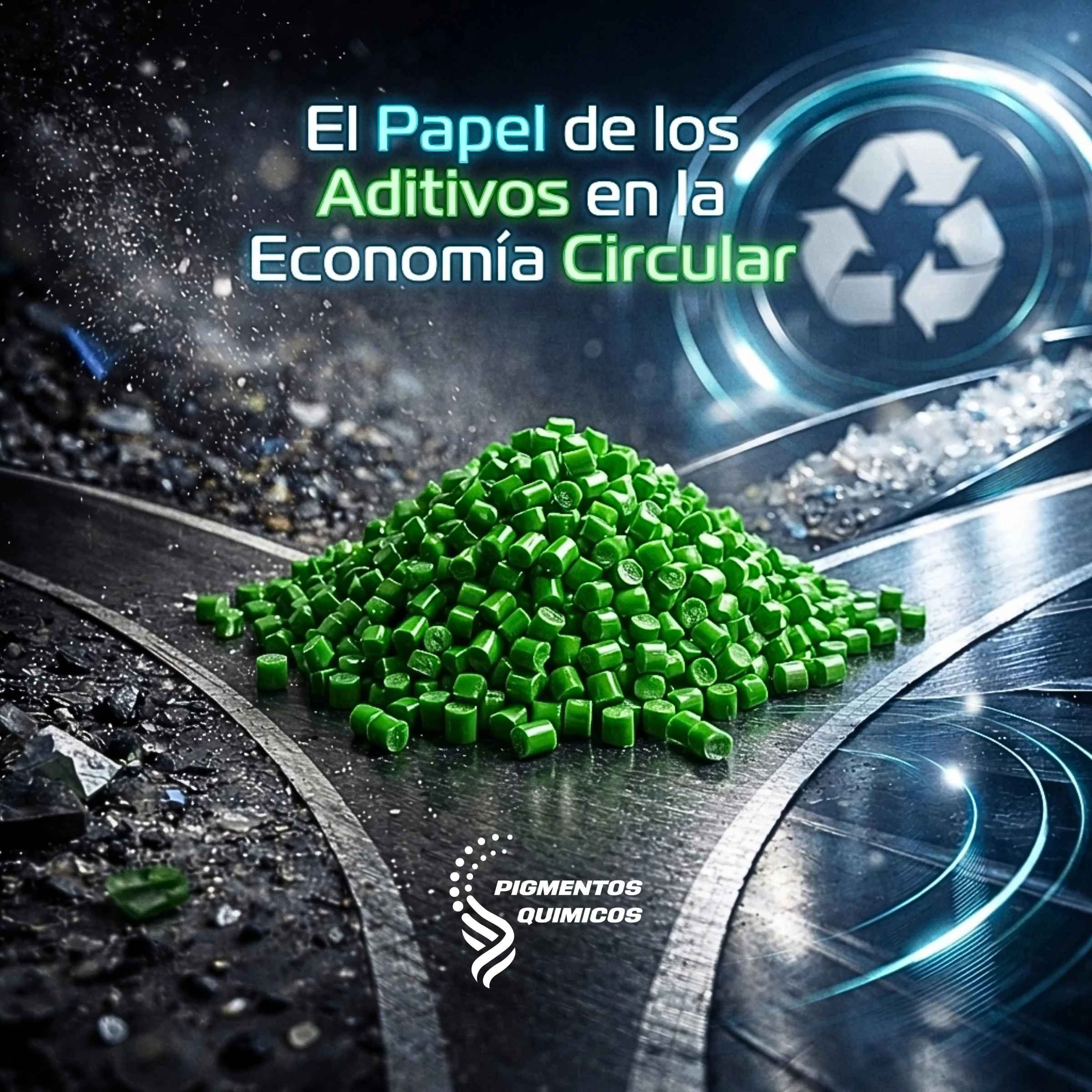
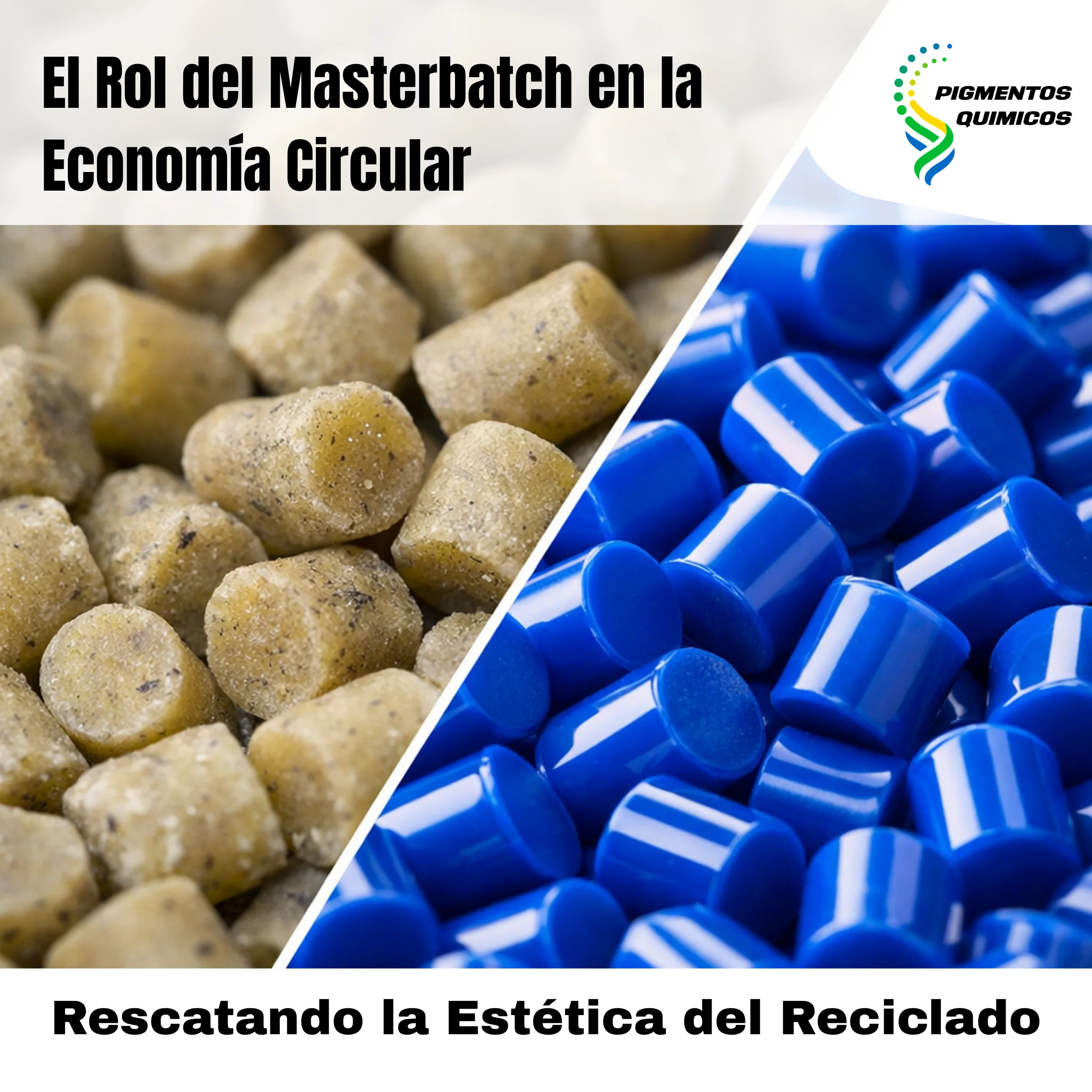
Only 10% of plastic waste is recycled globally. Additives are both the biggest obstacle and the most powerful catalyst for circularity in plastics.
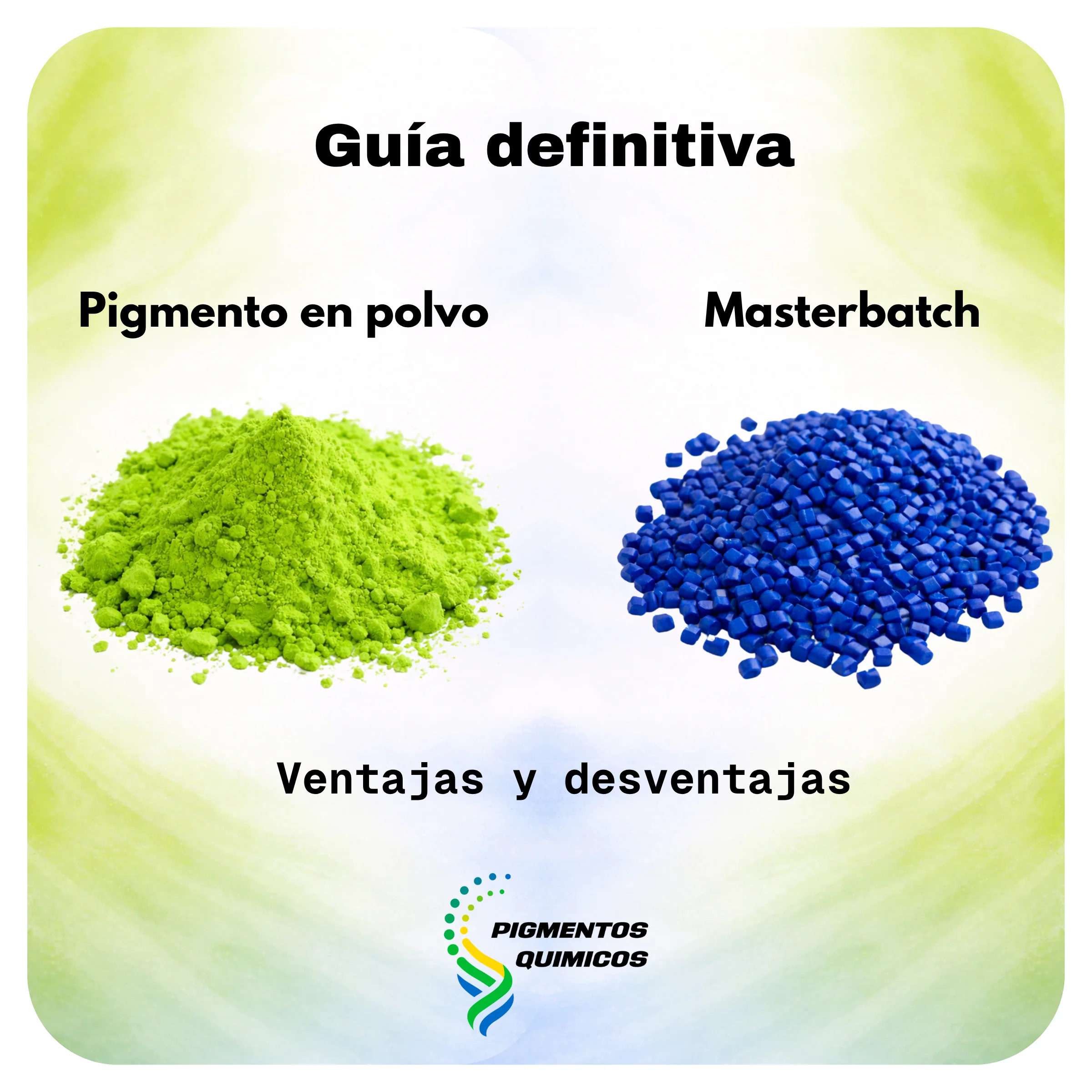
Pigment powder and masterbatch are not interchangeable versions of the same product. Learn the scenarios where each technology maximizes its technical and economic performance.
Color spots and chromatic streaks are the most frequent dispersion defects in plastic production. Learn to distinguish them and diagnose their root cause in less than one production run.
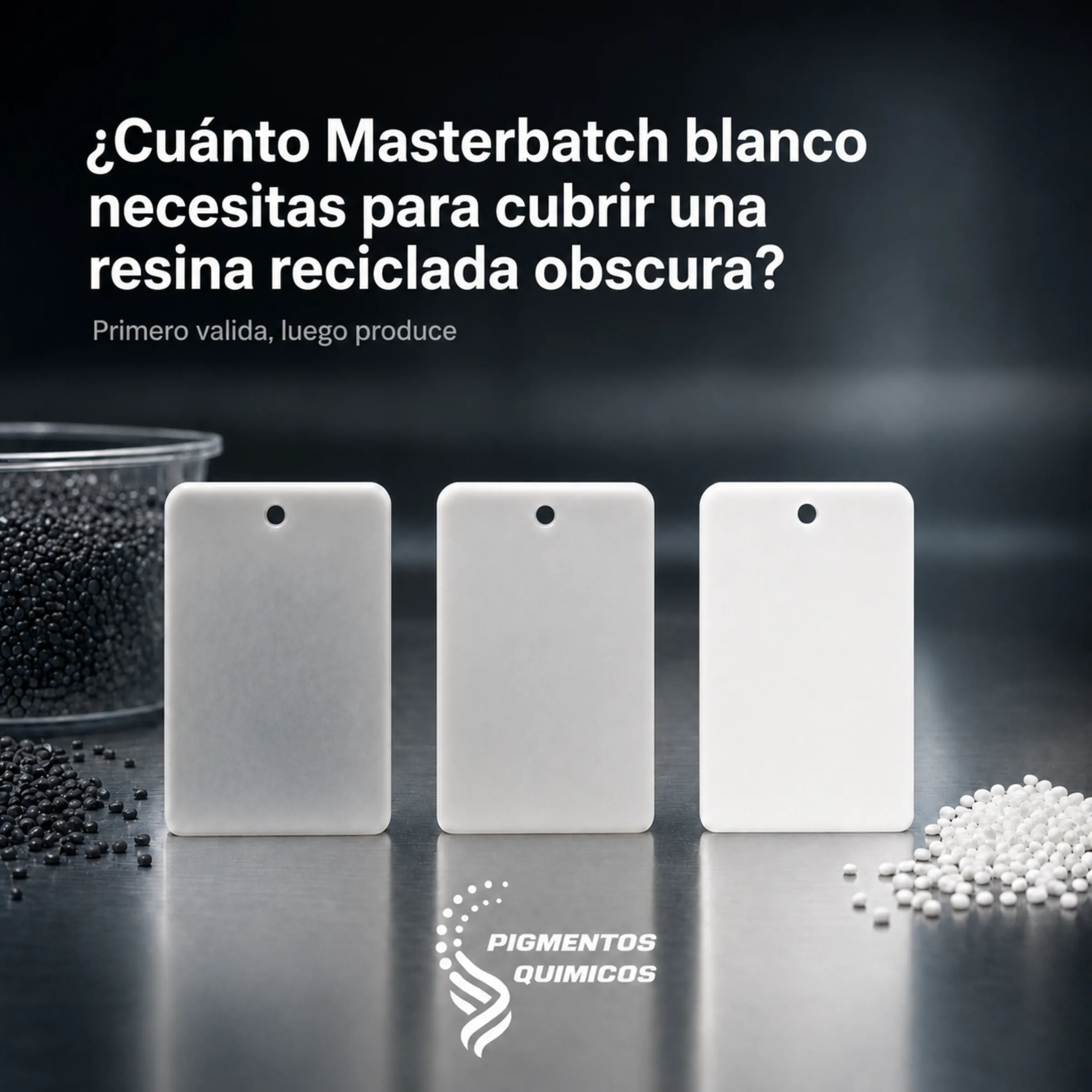
Recycled polymer arrives with tone variation, thermal degradation, and contaminants. A standard masterbatch cannot compensate for all that. Here is how the correct concentrate is formulated for PCR.
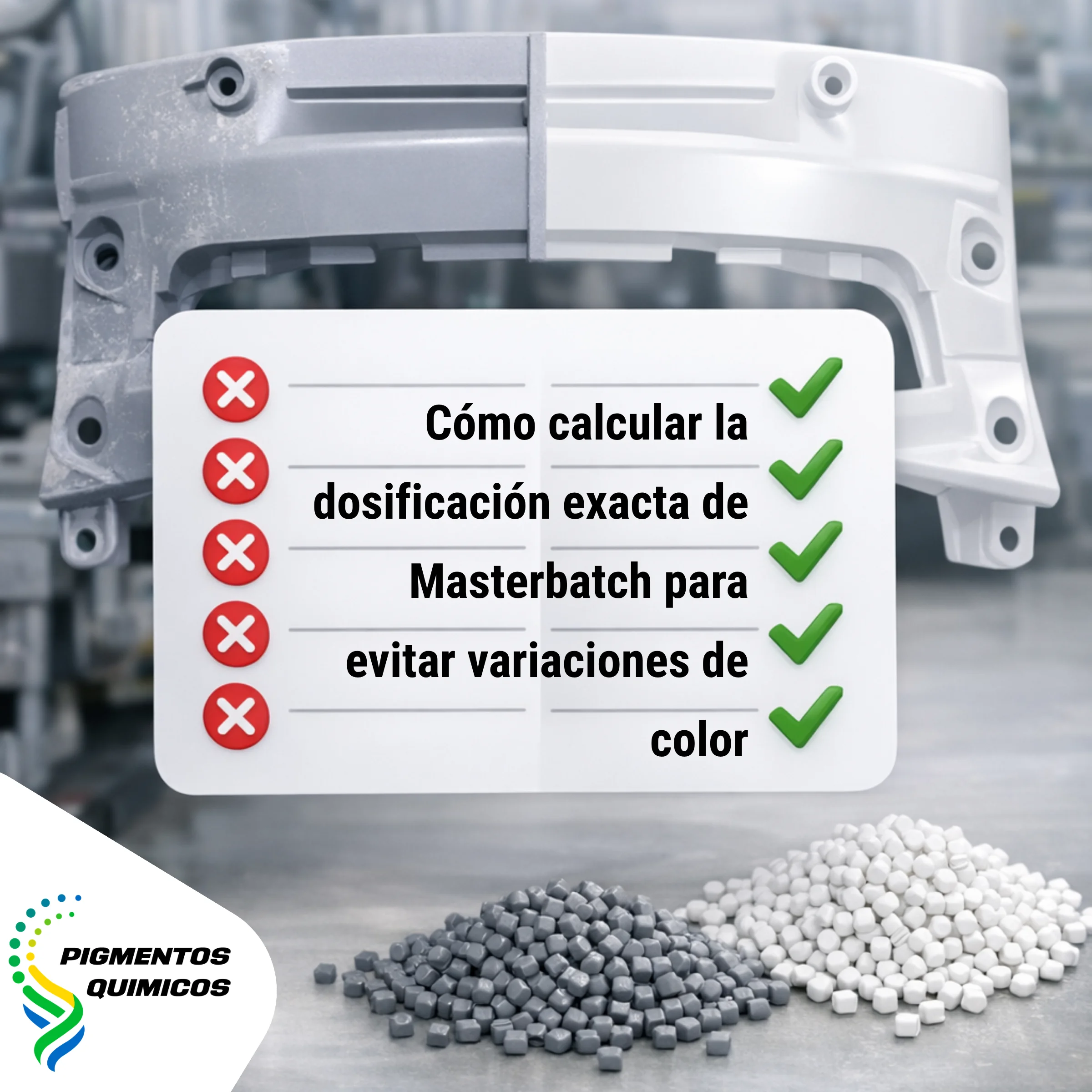
A dosing variation of 0.5% can produce color differences visible to the naked eye. Learn how to calculate and control masterbatch dosing to guarantee lot-to-lot consistency.
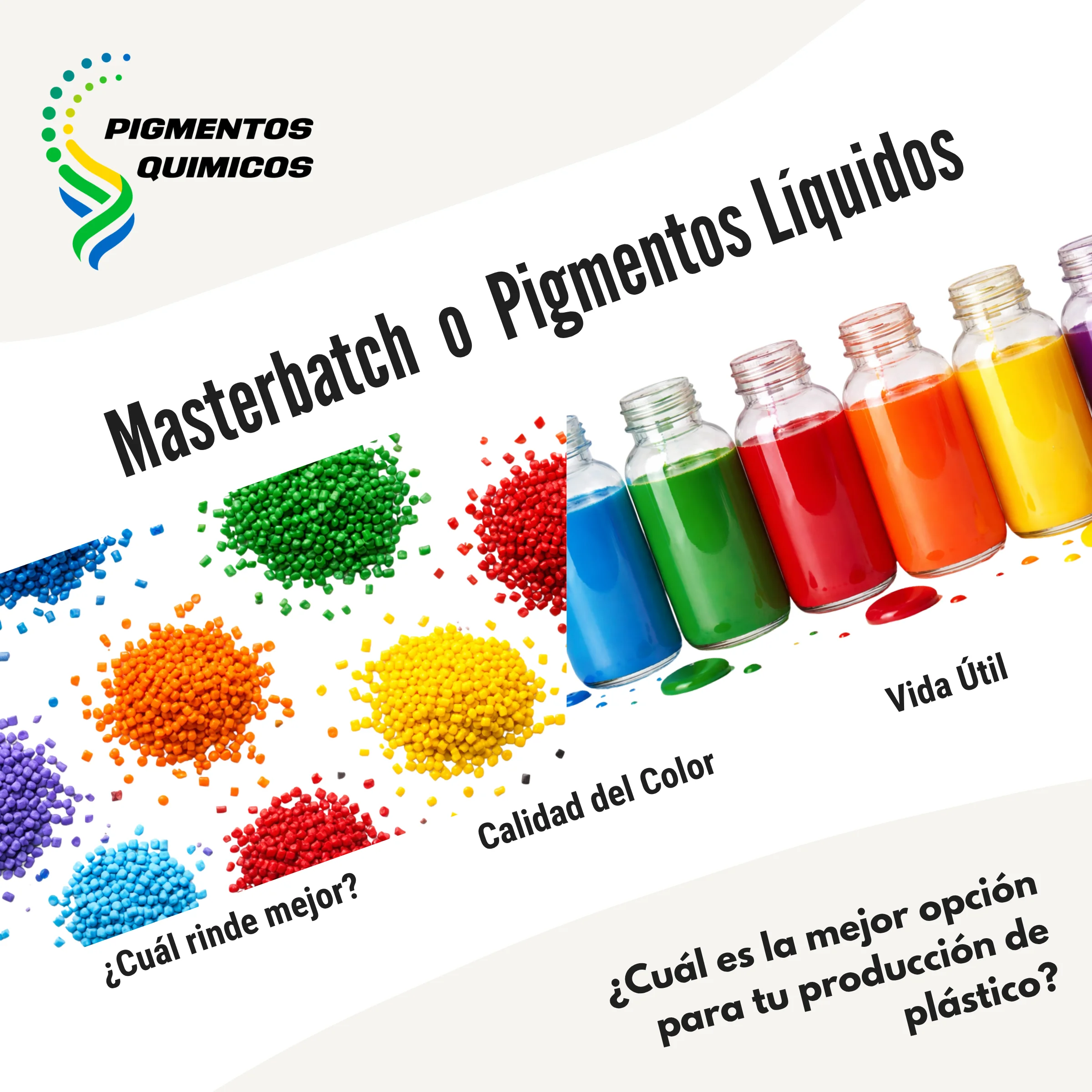
The decision between solid masterbatch and liquid pigment is not reduced to unit price. Dosing stability, chromatic consistency, and color change cost are the variables that determine the real cost.
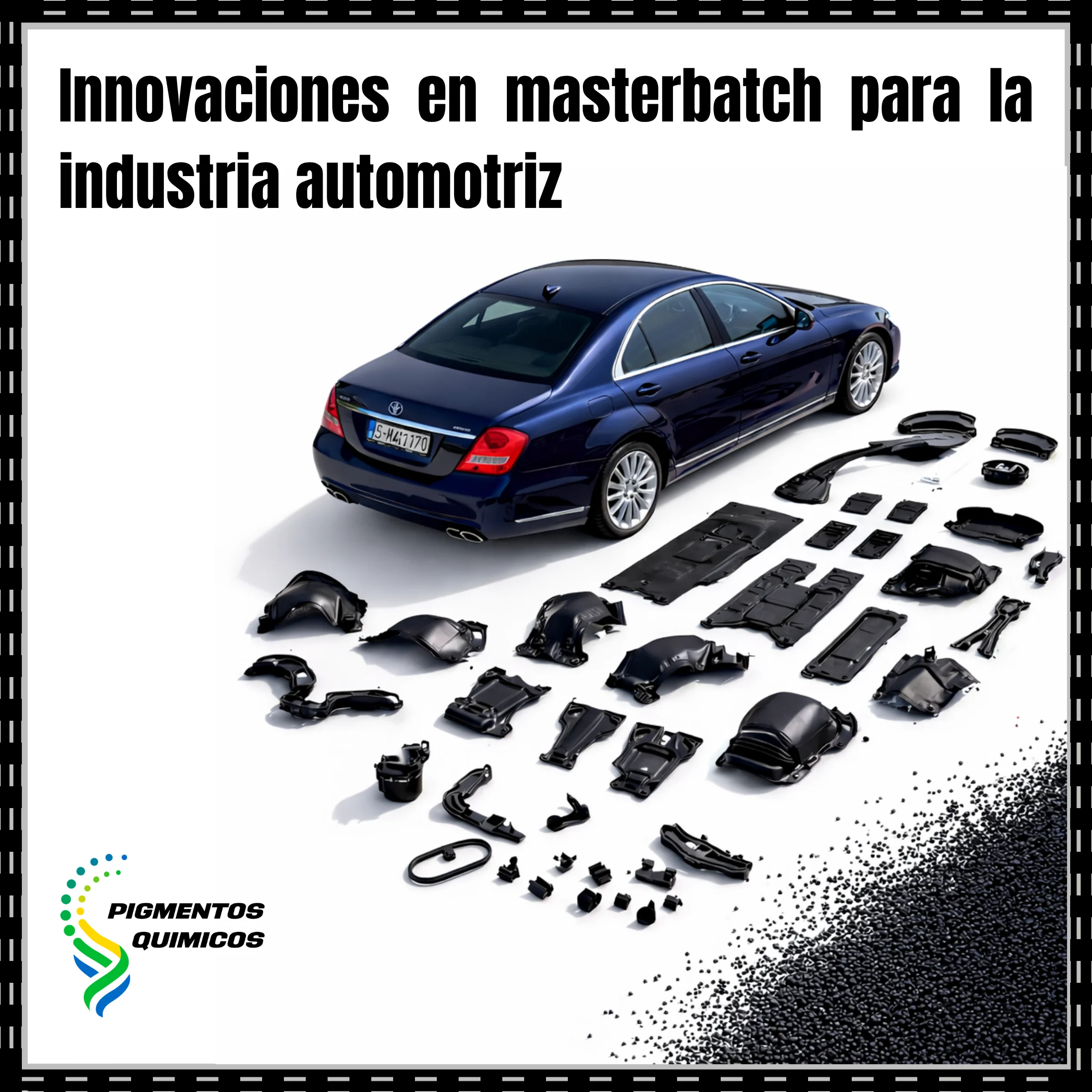
The automotive industry demands that the color of a plastic survive extreme thermal cycles, prolonged UV exposure, and decades of use. Generic masterbatch was not designed for that.
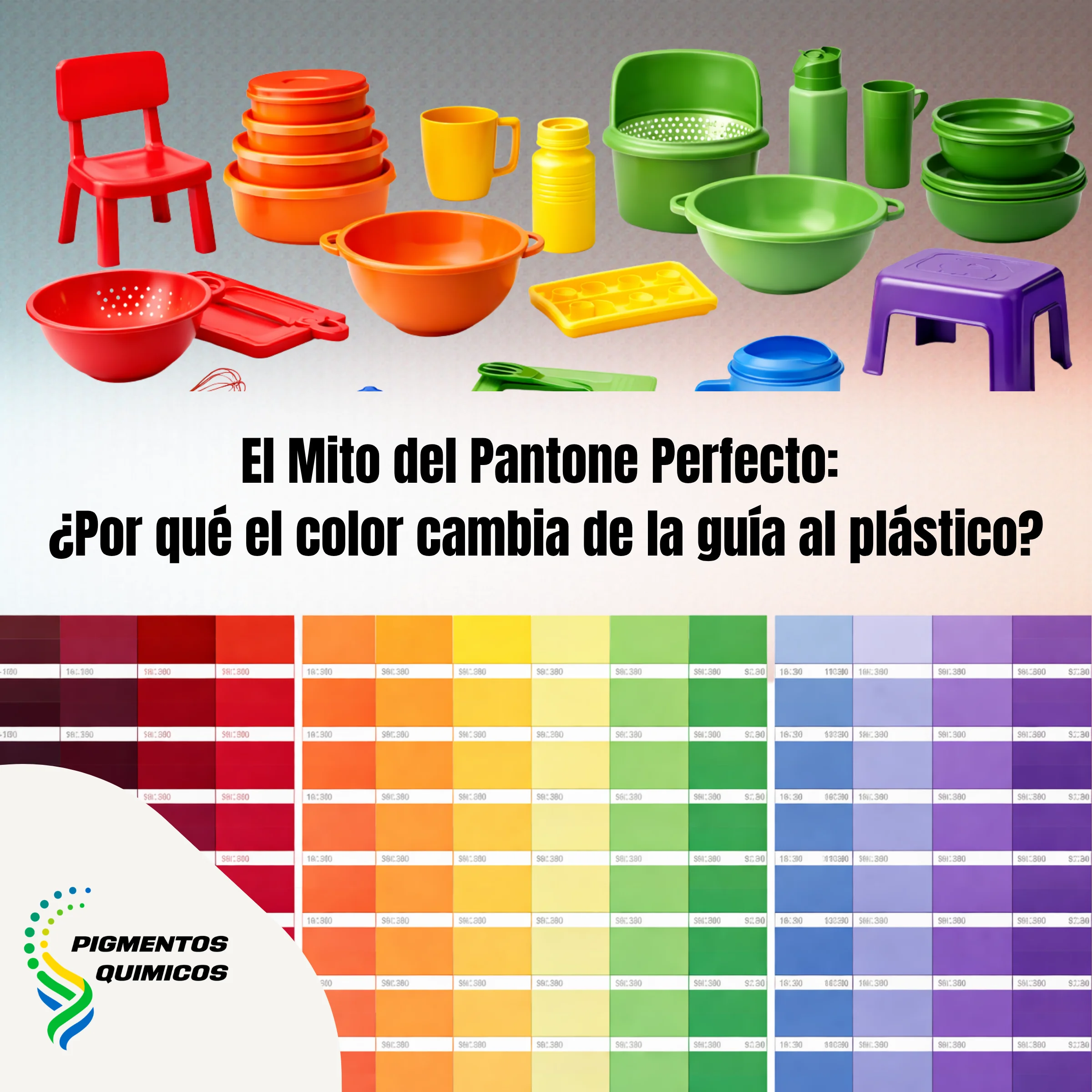
The Pantone 286C approved by design does not match the plastic part. It is not a masterbatch error: Pantone was designed for paper, not plastic.
A masterbatch incompatible with the base polymer produces dispersion defects, loss of mechanical properties, and quality rejections. Here are the three parameters that determine real compatibility.
Audited and validated processes under international quality standards. Every batch traceable, every color repeatable.

30 years specializing in masterbatch, pigments, and high-quality additives for injection, extrusion, and blow molding.
Color matching referenced to the Pantone system.