

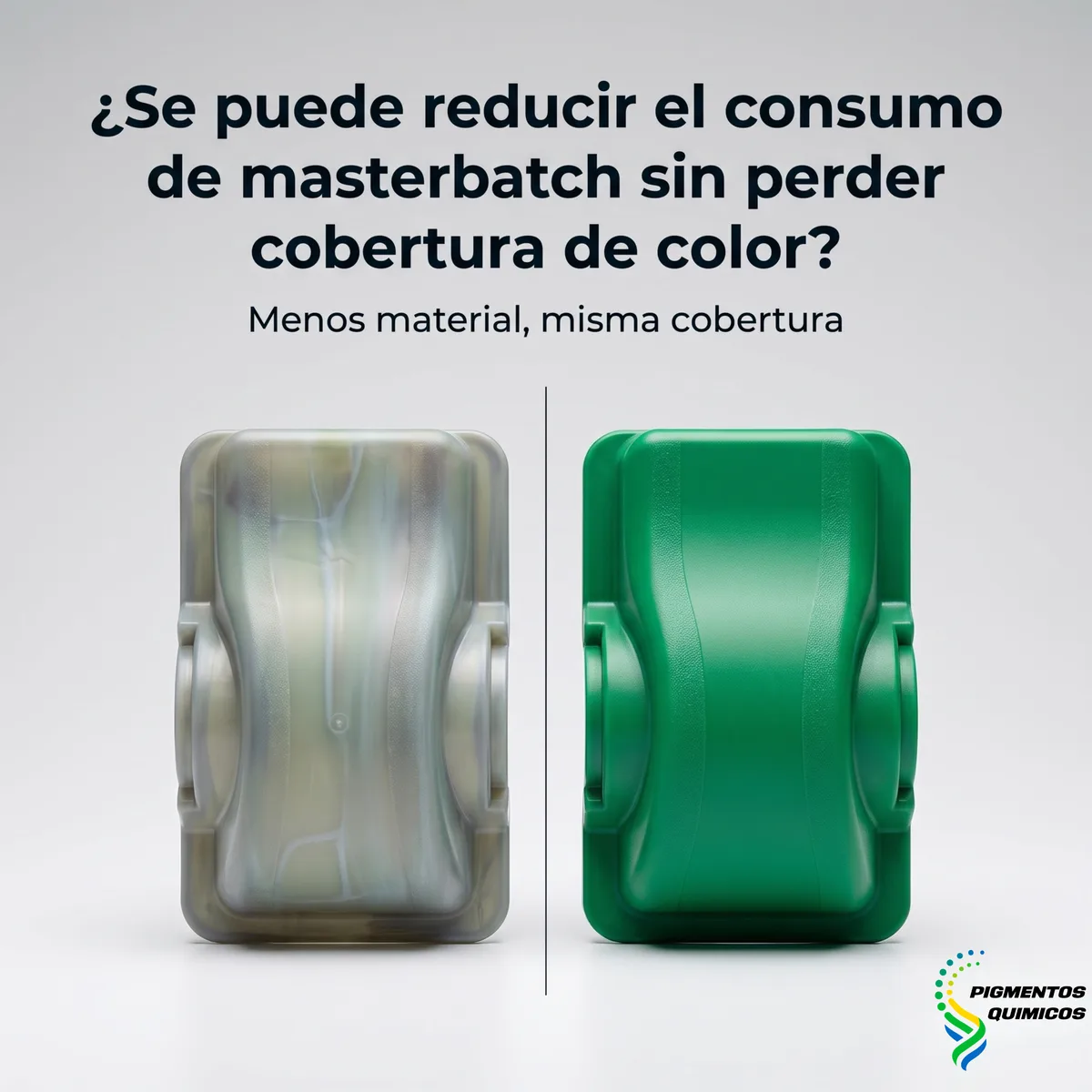
Can You Reduce Masterbatch Consumption Without Losing Color Coverage?
You can cut masterbatch consumption without losing coverage, as long as the change is validated with dispersion tests and a dosing curve before production.
A manufacturing team gets the instruction to cut the masterbatch percentage in the formula to lower the cost per kilogram of resin. The order goes through without first validating the pigment's tinting strength at the new concentration, and the first batch of parts comes out lighter, with visible blotches in the thinner wall sections. Quality catches the deviation only at final inspection, when the batch is already packed and staged for shipment, because nobody defined an intermediate checkpoint to verify coverage before completing the run. The end client rejects the entire order for insufficient color coverage, the plant has to reprocess the material at the original masterbatch percentage, and the savings targeted on the purchase order turn into extra cost in resin, energy, and line time.
You can reduce masterbatch consumption without losing color coverage, as long as the adjustment is validated with dispersion tests and a dosing curve before you change the formula on your plant floor.
The dosing cut that ends up multiplying your real consumption
The relationship between tinting strength and pigment concentration
Cutting the masterbatch percentage in your formula looks, at first glance, like a direct way to lower the cost per kilogram of resin. The problem shows up when that reduction is applied without accounting for the pigment's actual tinting strength at the new concentration. Below a certain threshold, the pigment no longer covers the substrate evenly, and the finished part shows shade variation, partial transparency in thin areas, or blotches your client spots immediately.
When that happens, the production team's usual response is to reprocess the whole batch at the original masterbatch percentage, which means consuming the material you were trying to save plus everything already spent on the failed attempt. The result is higher total consumption than before you tried the adjustment, on top of the resin, energy, and line time invested in the rejected batch. This relationship between concentration and tinting strength isn't linear across all pigments: some hold their performance up to a defined cutoff and then drop off sharply, which makes a cut applied without prior data even riskier.
When lowering the masterbatch percentage gets an entire batch rejected
Opacity, coverage, and wall thickness
Color coverage depends on the relationship between pigment concentration and part thickness. A thin-walled part needs a different pigment concentration than a thick part to reach the same visual opacity, and that difference is rarely documented in the generic technical data sheet that comes with the masterbatch. Cutting the dosing percentage without adjusting for part geometry is one of the most common causes of batch rejection for insufficient coverage.
Before lowering the concentration in your process, ask your supplier for a dosing curve specific to the wall thickness you work with, not the generic figure calculated on a standard test plaque. That curve shows you the exact point where reducing masterbatch starts to compromise opacity, and it lets you adjust your formula within a safe range instead of discovering the limit through a rejected batch. If your portfolio includes parts of different thicknesses made with the same color formula, you need a curve for each relevant geometry, because the safe range for a thick part doesn't automatically apply to a thin part from the same catalog.
The technical validation that separates real savings from rework risk
Dispersion tests and dosing curve
The savings you're after when reducing masterbatch are only real if they're validated before being applied to your full production volume. That validation includes a dispersion test confirming the pigment still distributes evenly at the new concentration, and a dosing curve showing how color coverage behaves across several percentages, not just at the one percentage you're considering.
At Pigmentos Químicos we build this curve together with our clients before recommending any reduction in consumption. The real goal is to find the point where your cost per part drops and color coverage stays within the specification your end client approved. That point gets documented in writing, with the approved minimum percentage and the inspection method used, so your production team has a clear limit instead of relying on a different visual judgment every shift.
How to adjust your formula without sacrificing the visual quality of the final product
Choosing a high-tinting-strength pigment and optimizing the process
A safer route to reducing consumption than cutting the percentage outright is to move to a pigment with higher tinting strength, capable of delivering the same color coverage at a lower concentration in the formula. This change calls for a validation similar to a supplier change: dispersion tests, batch comparisons, and fine-tuning of processing temperature, because a high-tinting-strength pigment often behaves differently during extrusion or molding.
The other factor that directly affects coverage is process control on your line: melt temperature, residence time, and screw speed influence pigment dispersion as much as concentration itself. Adjusting these variables alongside the dosing, rather than touching only the masterbatch percentage, lets you reduce consumption sustainably without compromising the visual quality your client expects in every production batch. Document each process adjustment along with its coverage result, so your team builds its own history instead of relying solely on the supplier's generic recommendation.
Other savings levers that don't compromise color coverage
Standardizing references and planning volume
When the reduction margin your dosing curve reveals turns out to be small, other savings levers can deliver more value without touching the color coverage of your finished product. Consolidating your purchase volume into fewer color references, negotiating terms based on annual volume, and standardizing dosing across similar production lines lowers your total operating cost without exposing your process to the risk of a rejected batch.
At Pigmentos Químicos we review with our clients the complete portfolio of references they use over a given period. In several cases, the biggest savings come from reducing the number of distinct references your plant has to keep in inventory and qualify separately, rather than from lowering the masterbatch percentage in one specific formula. That joint review often surfaces savings opportunities a dosing cut, on its own, could never have covered safely. Get in touch about your case at https://pigmentosquimicos.com
Frequently asked questions
How much can I reduce the masterbatch percentage without affecting color coverage?
The margin depends on the pigment's tinting strength, your part thickness, and the specific color you work with, so there's no single percentage valid for every process. A dosing curve built with your supplier on your real part geometry is the reliable way to know that margin before changing your formula in production. With high-tinting-strength pigments that margin tends to be wider than with conventional pigments, which makes the technical comparison even more valuable before deciding.
What tests should I ask for before lowering masterbatch dosing on my line?
Request a dispersion test at the new concentration and a dosing curve comparing at least three different percentages on the actual wall thickness of your part. These tests show the exact point where color coverage starts to break down, before that risk reaches your full production. Ask that the comparison also include a visual review under the same light source your end client uses, because perceived coverage can change with the inspection lighting.
Does reducing masterbatch consumption affect other properties of the finished product?
It can affect properties such as surface gloss or weathering resistance if the adjustment doesn't account for the additives that accompany the pigment in the formulation. That's why technical validation has to review the complete formula before approving any reduction in consumption in your process. An adjustment that looks only at color and overlooks these properties can solve a cost problem and generate, weeks later, a different complaint about product performance in the field. Always include an accelerated aging test when the end application will be exposed to the elements, to confirm that reducing masterbatch doesn't compromise that property along with the color.