

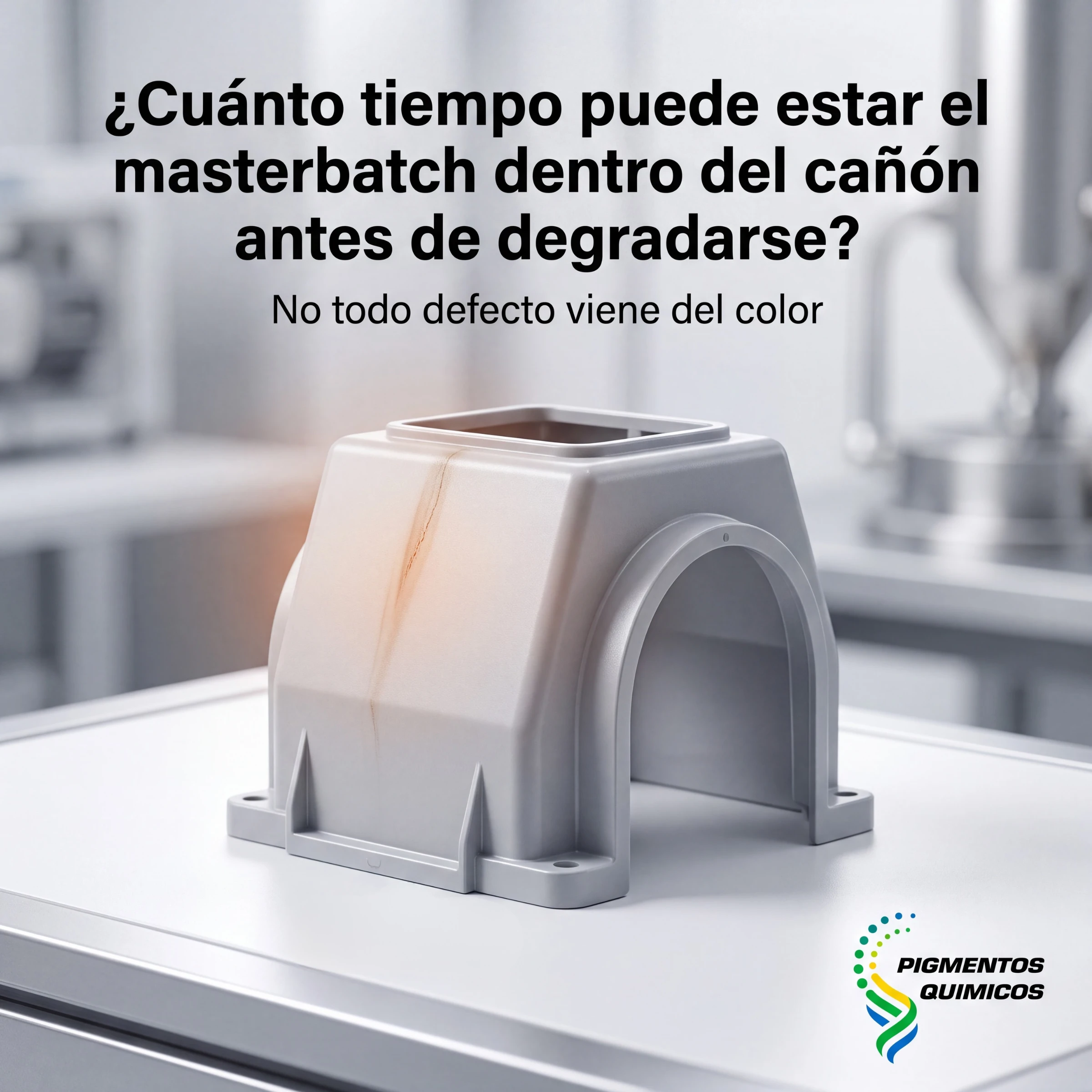
How Long Can Masterbatch Stay Inside the Barrel Before It Degrades?
Temperature and residence time in the machine are variables that are often underestimated. When material stays too long inside a hot barrel, it can burn, streak, or become brittle, and the defect is easily mistaken for a pigment problem.
The line stopped for forty minutes for a mechanical adjustment. When it started back up, the first parts came out with streaks and a brittleness they didn't have before the stop. The quality team rejected the lot and pointed straight at the masterbatch: inconsistent color, poor dispersion, supplier to review. No one asked how long the material had been sitting inside the hot barrel while the adjustment was being made.
Temperature and residence time in the machine are variables that are often underestimated. When material stays too long inside a hot barrel, it can burn, streak, or become brittle, and the defect is easily mistaken for a pigment problem.
The defect that looks like color but originates in the process
When a part comes out with streaks, partial discoloration, or unexpected brittleness, the quality team's natural reaction is to reject the masterbatch. It's a logical hypothesis because the defect shows up in the color, but the origin can be how long and at what temperature the material sat inside the equipment before injection.
What happens to the material when it stays too long in the barrel
If the plastic exceeds its thermal range or stays too long inside a hot barrel, it can burn, streak, become brittle, or affect the performance of the additives it contains. That thermal damage doesn't distinguish between resin, masterbatch, or additives: it affects the entire mix that was exposed to sustained heat.
Why line stops are the moment of highest risk
An unplanned stop, a mold change that takes longer than expected, or a wait between shifts leaves the material sitting still inside a barrel that's still hot. That extra residence time, not accounted for in the normal production process, is the scenario where this type of degradation shows up most.
Why visual diagnosis alone isn't enough
Not every visual defect comes from pigment. If temperature or residence time aren't controlled, the material can degrade and alter the final result, even when the masterbatch used was the same one from previous runs with no issues at all.
What your team should check before resuming production after a stop
Before restarting a run after a prolonged stop, it's worth purging the material that was exposed to sustained heat and running a control sample before approving the full lot. Documenting how long each stop lasted along with the working temperature helps you tell, the next time a similar defect shows up, whether the origin is in the process or in the material.
Frequently asked questions
How do I tell a thermal degradation defect apart from a pigmentation one?
Check whether the defect appeared right after a line stop or a temperature change. If it coincides with those events, thermal degradation is the first hypothesis to rule out before questioning the masterbatch.
Does every masterbatch have the same resistance to residence time?
No. Each masterbatch's formulation and additives affect how well it withstands prolonged heat exposure, which is why it's worth confirming this with the supplier for processes with frequent stops.
What should be done with material exposed during a long stop?
The recommended approach is to purge it before resuming production and validate with a control sample, instead of assuming the first parts after startup are in normal condition.