
What Are Plastic Additives and Why Are They the Invisible Heroes of the Industry?
Additives turn a generic resin into a material that resists heat, weather, fire, or bacteria. The global additives market exceeds 57 billion dollars.
What Are Plastic Additives and Why Are They the Invisible Heroes of the Industry?
Plastic additives are chemical compounds incorporated into polymers to modify or improve their functional, aesthetic, and durability properties. Without them, no plastic product could meet the technical and regulatory standards required by modern industry.
The ingredient that changes everything
In the plastics industry, attention usually focuses on the base resin. However, behind every product that withstands extreme heat, endures outdoor conditions, repels bacteria, or passes fire safety standards, there is a set of compounds that operate in silence: additives.
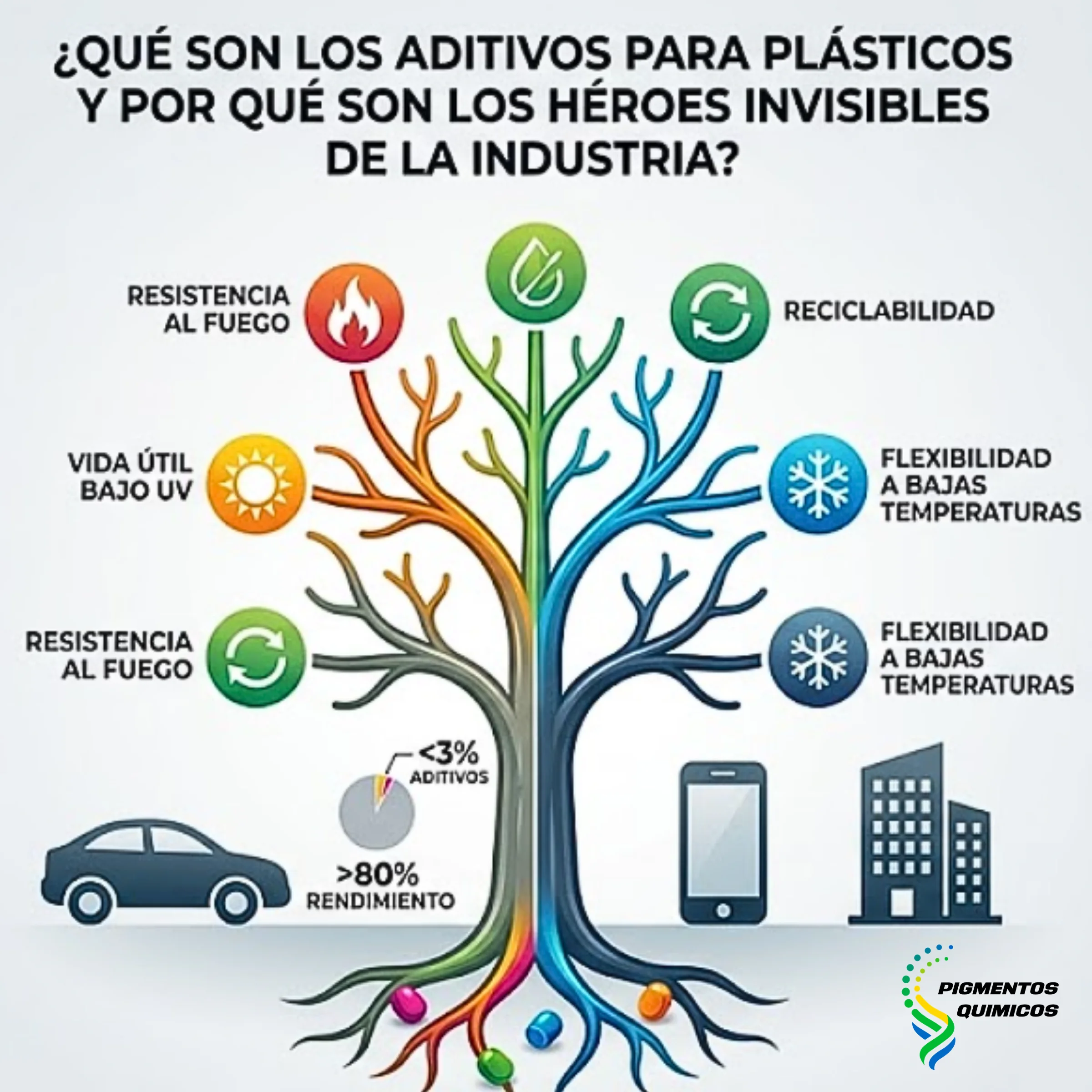
Plastic additives are substances incorporated into base polymers to alter or improve certain characteristics of the plastic, such as its strength, flexibility, durability, or appearance. Their weight in the total formula can be minimal (sometimes less than 3%), but their impact on final performance is decisive.
The market confirms this with compelling data: according to Grand View Research, the global plastic additives market size is expected to reach approximately $57.636 billion by 2025, with a compound annual growth rate of 5.6% between 2024 and 2030. Furthermore, green additives represent the fastest-growing segment, at a rate of 8.2% for 2024.
The 6 types of additives every company in the sector must know
The strategic role of additives in the circular economy
The regulatory landscape and sustainability pressure have repositioned additives as industrial transformation levers, not just processing auxiliaries.
In the plastics recycling industry, additives are essential for improving the quality of reprocessed material. These compounds allow properties to be recovered, processing to be facilitated, and the service life of recycled polymers to be extended.
Nanotechnology opens a new dimension: nanotechnology-based additives can respond dynamically to environmental changes such as variations in temperature, light, or humidity, and even self-heal against damage, opening new opportunities in sectors such as automotive, construction, and electronics.
Additionally, the push for sustainability and the development of biodegradable plastics contribute to the evolution of the market, making green and compostable additives the most relevant R&D focus for the coming years.
The golden rule in additive selection
The selection of the right additive depends on the desired properties for the final product, such as heat resistance, flexibility, or durability, as well as the type of plastic, the manufacturing process, and applicable regulations.
Synergistic combination is also decisive: the strategic combination of different additives can create synergies that amplify their effects and open new possibilities for the industry.
Conclusion
Additives are, without doubt, the silent factor that determines whether a plastic product meets or fails to meet the demands of the market. Understanding their function, types, and impact on the material's life cycle is today a strategic competency, not just a technical one.
Frequently Asked Questions
What proportion of a plastic formulation is additives?
The weight of additives in the total formulation can be minimal, sometimes under 3 percent, and it still determines the final performance of the part. That is why an additive change that looks minor on a cost sheet can completely change how the product behaves in the field.
What are the six types of additives worth knowing?
UV and thermal stabilizers, antioxidants, plasticizers, flame retardants, antimicrobial additives, and masterbatch or colorants. Each one answers a different problem: degradation from solar radiation, oxidation during processing, lack of flexibility, flammability, microbial contamination, and color uniformity.
How do you choose the right additive for a product?
The choice depends on the properties the end product needs, such as heat resistance, flexibility or durability, and also on the type of plastic, the manufacturing process and the applicable regulations. The combination matters as much as the individual additive: combining additives strategically creates synergies that amplify their effects.