

Masterbatch for Circular Economy: Coloring Post-Consumer Recycled Polymer
Recycled polymer arrives with tone variation, thermal degradation, and contaminants. A standard masterbatch cannot cover that. How to formulate for PCR.
The integration of post-consumer recycled (PCR) polymer into production lines is one of the most complex technical challenges facing the plastics industry today. Brand owners demand documented recycled content; regulatory frameworks increasingly mandate it. The problem is that PCR resin does not behave like virgin polymer, and standard masterbatch was not formulated for it.
What PCR resin brings to the process that virgin resin does not
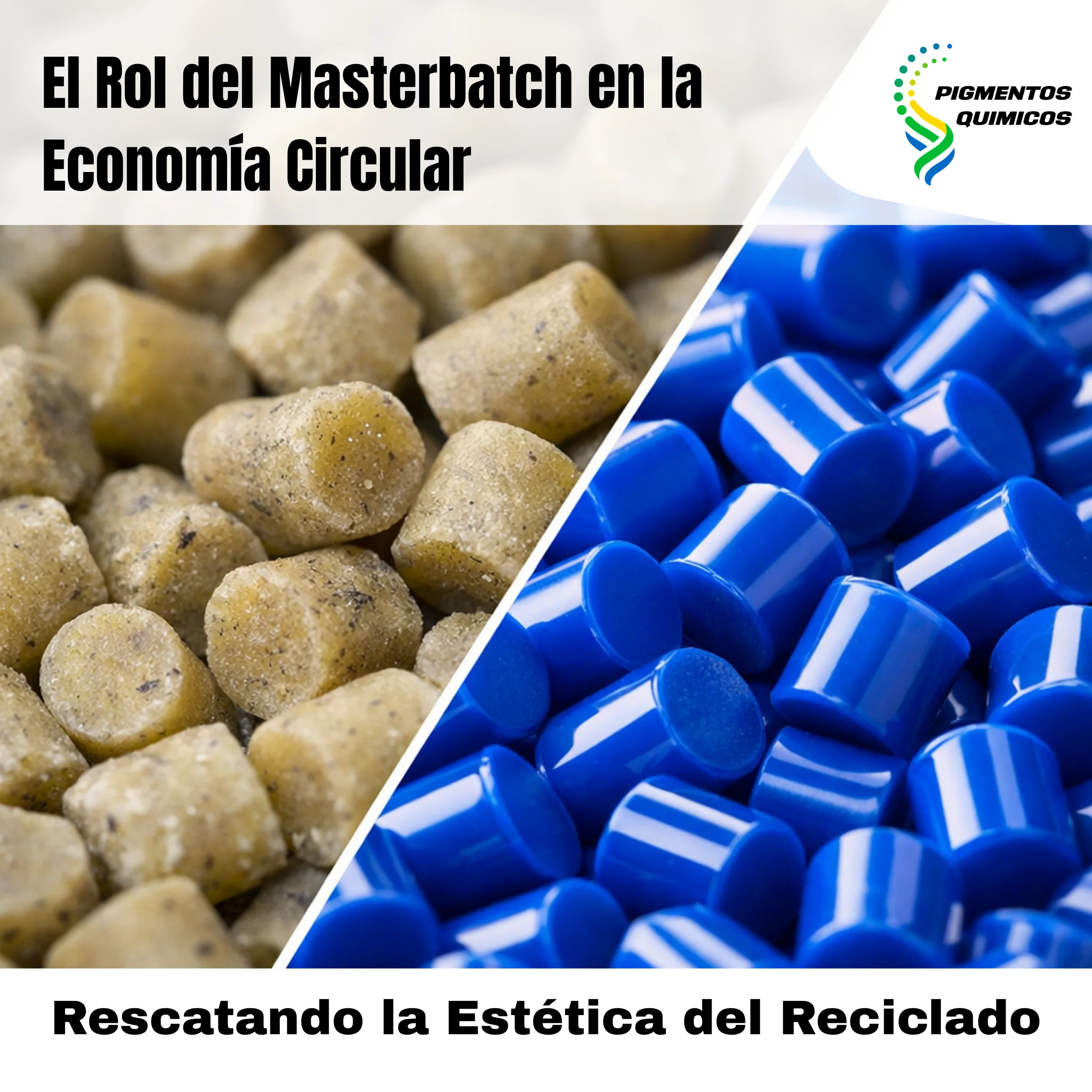
Post-consumer recycled polypropylene (rPP) and recycled polyethylene (rPE) arrive with three characteristics that standard masterbatch formulations ignore: variable base color (the hue of recycled resin varies between lots and between suppliers depending on the mix of source materials), accumulated thermal degradation (each processing cycle reduces polymer molecular weight and generates degradation chromophores that produce yellowish or brownish tones), and contaminants (residual pigments from mixed-source materials, mineral impurities, carbonized particles).
A masterbatch formulated for virgin polymer assumes a neutral or minimally tinted base color. When that masterbatch is dosed into PCR with a gray-beige background, the resulting color is the sum of the masterbatch pigment and the recycled base tone: unpredictable and inconsistent between PCR lots, even when nothing in the production process has changed.
Three functions a PCR masterbatch must perform that standard formulations do not
The circular economy equation: why correct masterbatch enables higher recycled content
Adopting recycled plastic in production without an adequate masterbatch strategy paradoxically increases product rejection and material waste. Lots with unacceptable color variation end up reprocessed or in final disposal, eliminating the environmental benefit of using recycled material.
A masterbatch designed for the variability of the recycled substrate changes that equation: it enables increasing recycled content percentage without increasing rejection rate. According to life cycle analysis (LCA) data available in the industry, masterbatch produced with recycled carrier resin can reduce coloring carbon emissions by 30–48% compared to equivalent virgin resin formulations. With the right masterbatch strategy, recycled content targets of 30–70% in opaque products are achievable without visible color variation.
Development protocol: starting with PCR characterization, not a standard formula
The first step in PCR masterbatch development is colorimetric characterization of the recycled base resin. Spectrophotometrically measuring the PCR's L*, a*, and b* values provides the data needed to design compensation into the masterbatch formulation. This characterization should be performed on a representative sample of each PCR lot: because the base color of recycled resin varies between suppliers and between lots from the same supplier, and the masterbatch formulation must be designed for that variability, not against it.
Frequently Asked Questions from production and product development management
What percentage of recycled content can I use without affecting the aesthetic quality of the product?
The percentage of recycled content that can be used without visible degradation of aesthetic quality depends on the type of product, opaque versus transparent or translucent, on the target color, dark versus light or pastel, on the quality level of the recycled material and on the masterbatch formulation. With a masterbatch designed specifically for the customer recycled substrate, recycled content of 30 to 70 percent is achievable in opaque products with no perceptible color variation.
How do I manage lot to lot variability in recycled resin from my supplier?
Lot to lot variability in recycled resin is the main source of color inconsistency in PCR production. The most effective strategy is to establish a colorimetric characterization of each lot of recycled resin before it goes into production and adjust the masterbatch formulation to compensate for the differences. At Pigmentos Quimicos we offer per lot formulation adjustment for customers with quality critical production.
Is masterbatch for recycled polymer compatible with food contact certifications?
Whether a masterbatch complies with food contact regulations depends on the specific formulation of the pigments and additives used, not on the type of substrate. At Pigmentos Quimicos we formulate masterbatch for recycled polymer compliant with the applicable regulations, FDA 21 CFR, EU Regulation 10/2011 or the local equivalent, when the end product has a food contact application, selecting pigments and additives that meet the purity and migration requirements set by the regulation in force.