
How Much Does Masterbatch Cost and What Drives Its Price per Kilo?
Masterbatch is quoted per kilo, and its real cost is that price multiplied by your dosage. Learn which factors drive its price and how to compare quotes.
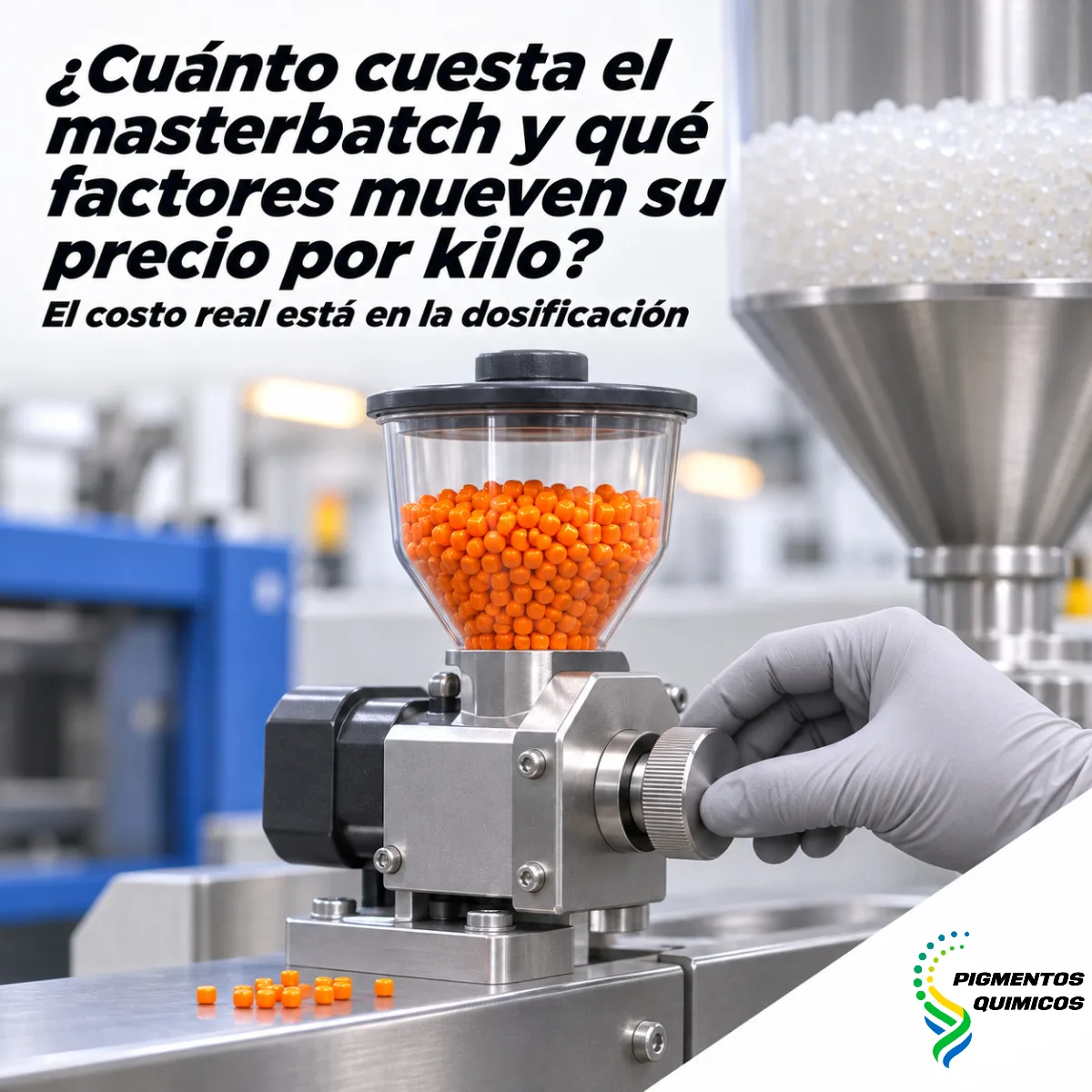
Masterbatch is quoted per kilo, and its price changes with every formula and every order. It is driven by the pigment type and loading, the carrier resin, the additives, health requirements, color development and volume, and its real cost comes from multiplying that price by your dosage.
Your purchasing department requested three quotes for the same cap blue and chose the cheapest per kilo. The difference against the previous supplier looked clear in the spreadsheet, and the order was signed without consulting production. The first order arrived on time and went straight into the injection molding machine.
At the usual dosage, the blue came out pale, and the supervisor raised the percentage until the shade matched. That adjustment doubled masterbatch consumption per part. At month end, color spending exceeded what the previous supplier had cost, the inventory was used up two weeks earlier than planned and the emergency purchase was paid with express freight. The savings in the spreadsheet turned into an extra cost nobody had budgeted.
The price per kilo is only half the calculation
A masterbatch quote states a price per kilo, and that number says little on its own. Masterbatch is blended with your resin at a percentage, and what you pay for the color of each part depends on that percentage. The calculation that works for comparing is this: the price per kilo of masterbatch multiplied by the dosage gives the cost of color per kilo of part.
An example with ratios shows the effect. If one masterbatch is dosed at 2%, one kilo colors 50 kg of resin. If another is dosed at 4%, the same kilo colors 25 kg. To come out cheaper in the part, the second one has to cost less than half as much per kilo as the first. That difference in yield is explained by the pigment loading and its tinting strength, which is why the recommended dosage should be written into every quote.
In our products the dosage ranges from 1 to 4%, depending on color intensity, resin and process. Within that range, the high end multiplies the cost of color per part by four compared with the low end, at the same price per kilo. A quote that leaves out the dosage leaves your purchasing team without half the data.
Five formula factors that drive the price per kilo
The price of a kilo of masterbatch comes from what goes into it. These are the five components that move it the most:
1. Pigment type, the most expensive component in the formula
Pigment weighs more in the price than the carrier resin, and its cost varies widely between families. Inorganic oxide pigments, such as titanium dioxide and iron oxides, cost less per kilo and are used at high loadings. High-performance organic pigments, which withstand high temperatures and prolonged sun exposure, are priced higher and used at low loadings. Pigments with a metallic or pearlescent effect add another cost step and require their own process care.
That is why a bright red that must withstand weathering and be processed at high temperature carries more expensive pigments than an earthy brown for an indoor part. The color your brand requires and your part's conditions of use define the list of possible pigments, and that list sets the price floor.
2. Pigment loading within the concentrate
Loading is the percentage of pigment inside the masterbatch. A concentrate with higher loading costs more per kilo and is dosed in smaller amounts. A concentrate with low loading looks cheap on the quote and forces a higher dosage on the machine, as happened to the plant in the opening. Loading also has a technical ceiling: beyond a certain point, the carrier resin loses its ability to keep the pigment dispersed and dispersion quality drops.
3. Carrier resin and your processing temperature
The carrier is the plastic that holds the pigment, and it must be compatible with your resin. We make masterbatch for polyethylene (PE), polypropylene (PP), polystyrene (PS), polycarbonate (PC), polyethylene terephthalate (PET) and acrylonitrile butadiene styrene (ABS). A carrier for PE and PP film or injection molding has a different cost than a carrier for PC or PET, which are processed at higher temperatures and require more stable pigments. The carrier is chosen for your resin before quoting, and that choice changes the price.
4. Additives that travel in the same pellet
A masterbatch can carry color and additive in the same pellet: ultraviolet (UV) stabilizer, antistatic, slip, antiblock or flame retardant. Each additive adds its cost to the kilo of masterbatch and, in exchange, eliminates a second concentrate, a second hopper or a second feeder. When comparing quotes, confirm which additives each one includes and at what concentration, because a lower price may come from a formula without the UV protection your outdoor part needs.
5. Health requirements for your part
A masterbatch for food packaging or toys works with a reduced list of permitted pigments and additives, and each component needs its supporting documentation. That selection rules out the cheapest options, such as pigments with heavy metals, and raises the cost of the formula. We have formulations that comply with U.S. Food and Drug Administration (FDA) regulations for direct and indirect food contact.
Order factors that also go into the price
Two identical formulas can be priced differently because of how they are ordered. These three factors depend on your purchase.
Standard color or custom development
A standard color ships from inventory. At Pigmentos Químicos we carry 62 standard masterbatch colors available immediately from 25 kg. A custom development includes the lab work to match your reference, a free 1 kg sample so you can validate it on your line and a minimum production of 100 kg, which we deliver 7 to 10 business days after you approve the sample.
If a standard shade meets your color and process needs, it is the fastest option. If your brand requires an exact shade, development gives you a registered formula to repeat the same color in every order.
Purchase volume and frequency
Volume weighs on the price per kilo, and we offer volume discounts on our standard products. A purchase planned around your monthly consumption allows a better quote than a series of small, urgent orders. In addition, every week we publish standard colors on promotion at a special price, with no minimum order on selected products.
Freight, delivery and documentation
Freight is quoted based on the location and volume of the order, and it is free if you pick up at our plant. Standard products arrive in 24 to 48 business hours in the metropolitan area where our plant is located and in 3 to 5 business days in the rest of the country. Every order includes a quality certificate, technical data sheet and safety data sheet.
How to compare two quotes on the same basis
Before deciding on price per kilo, ask each supplier for these four data points and compare them side by side:
- 1. The recommended dosage for your resin, your process and your thickness, in writing.
- 2. The cost of color per kilo of part, calculated with that dosage.
- 3. The carrier resin, the thermal stability of the pigments and the additives included in the formula.
- 4. The documentation for each lot and the health requirements the formula meets.
With those four data points, two quotes become comparable. The rest of the analysis, such as technical support, lot-to-lot repeatability and the risk of a rejection, is part of the total cost of switching suppliers, and it is worth reviewing before you change formulas.
How we build a quote at Pigmentos Químicos
Our quote starts with your process. You tell us your resin, your application, the color or function you need and your monthly volume. With that information we propose a standard shade or a custom development, and we send you the price with its delivery date. Every development includes its dosage recommendation, so you can calculate the cost of color per part from the first order.
The price is confirmed with our sales team and becomes firm when the order is formalized in the purchase order, because the cost of pigments and resins changes with the market. If you already have a quote from another supplier, share the dosage they recommended and the thickness of your part. With that information we calculate the cost of color per kilo of part with you and compare on the same basis.
The price per kilo of masterbatch comes from the pigment, its loading, the carrier, the additives, the health requirements and the way you place your order, and its real cost is measured in each part through the dosage. At Pigmentos Químicos we quote with that data on the table so you can compare on the same basis. Send us your resin, your process, your color and your monthly volume, and we will reply with the shade, the technical data sheet and the price.
Frequently asked questions
Why does development masterbatch have a 100 kg minimum order?
A development is produced with a formula made for your part, and each production batch involves equipment cleaning, color adjustment and lot quality control. The 100 kg minimum spreads that work over a volume that keeps the price per kilo reasonable. If your consumption is lower, first check whether one of our 62 standard colors matches your shade, because those are supplied from 25 kg.
Is it worth buying more volume to lower the price per kilo?
It is worth it up to the volume your plant consumes and stores properly. Masterbatch kept for a long time in a humid warehouse or with sharp temperature swings puts its performance at risk, and leftover stock of a color you no longer produce is tied-up money. The practical approach is to quote with your monthly consumption and schedule the deliveries.
What information do I need to get an accurate quote?
Your resin, your conversion process, the color or reference you need, the part thickness, the additives you need, whether the part will be in contact with food and your estimated monthly volume. With that information, the price per kilo and the recommended dosage arrive together, and you can calculate the cost of color per part from day one.
Related articles
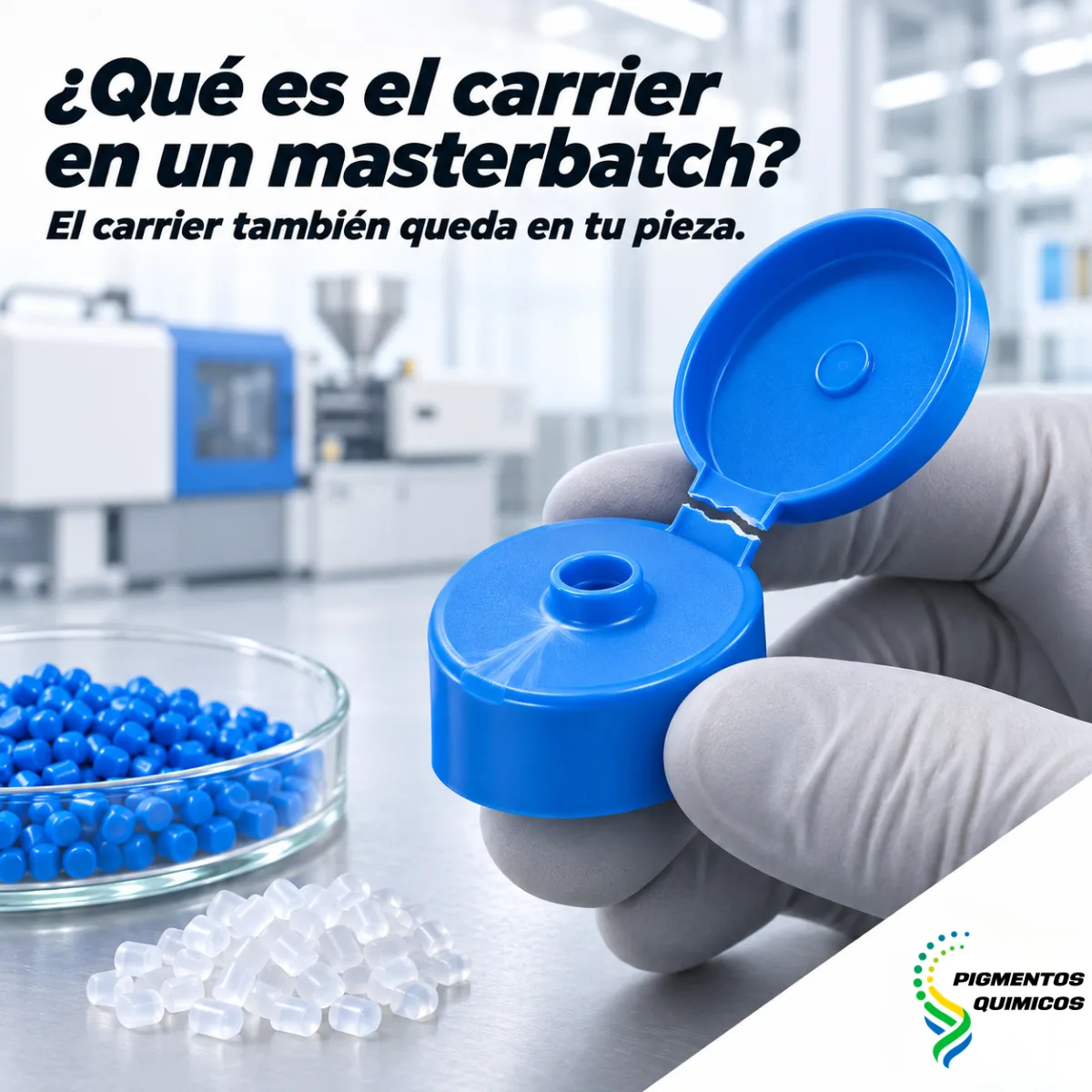
What Is the Carrier in a Masterbatch?
The carrier is the resin that forms the base of every masterbatch pellet. Learn what it does in your barrel and what it leaves in your part.

What Are Biodegradable Plastics?
A biodegradable plastic turns into water, carbon dioxide and biomass under defined conditions. Learn the resin families and how to process and color them.

What Is the Difference Between Biodegradable and Compostable?
Biodegradable describes a process, and compostable is a condition a standard defines and certifies. Learn the standards and what your customer can claim.