Which Environmental Regulations Apply to the Plastics Industry in Mexico?
Environmental rules for plastics in Mexico work in three layers. Learn what each one requires of your plant and how masterbatch helps you comply.
Your plant extrudes polyethylene film and has supplied colored bags to a convenience store chain for years. This year that customer's compliance department sent you a twelve-page questionnaire. It asked for your registration as a waste generator, your management plan for process scrap, the safety data sheet for each masterbatch, the support for the claim printed on the bag and evidence that your products comply with the single-use plastics laws of every state where the chain operates. Your administrative team gathered what it could find and left several boxes blank.
Two weeks later the answer arrived. The customer pulled your bags from its Mexico City stores because the claim on the bag promised something no certificate supported, and it froze orders for the rest of the country until you deliver the complete file. That same month, an inspection by the state authority found bags of purge and trim mixed with general waste and no logbook. The fine was smaller than the lost order, and the lost order was smaller than the cost of explaining to your customer which regulations you were missing.
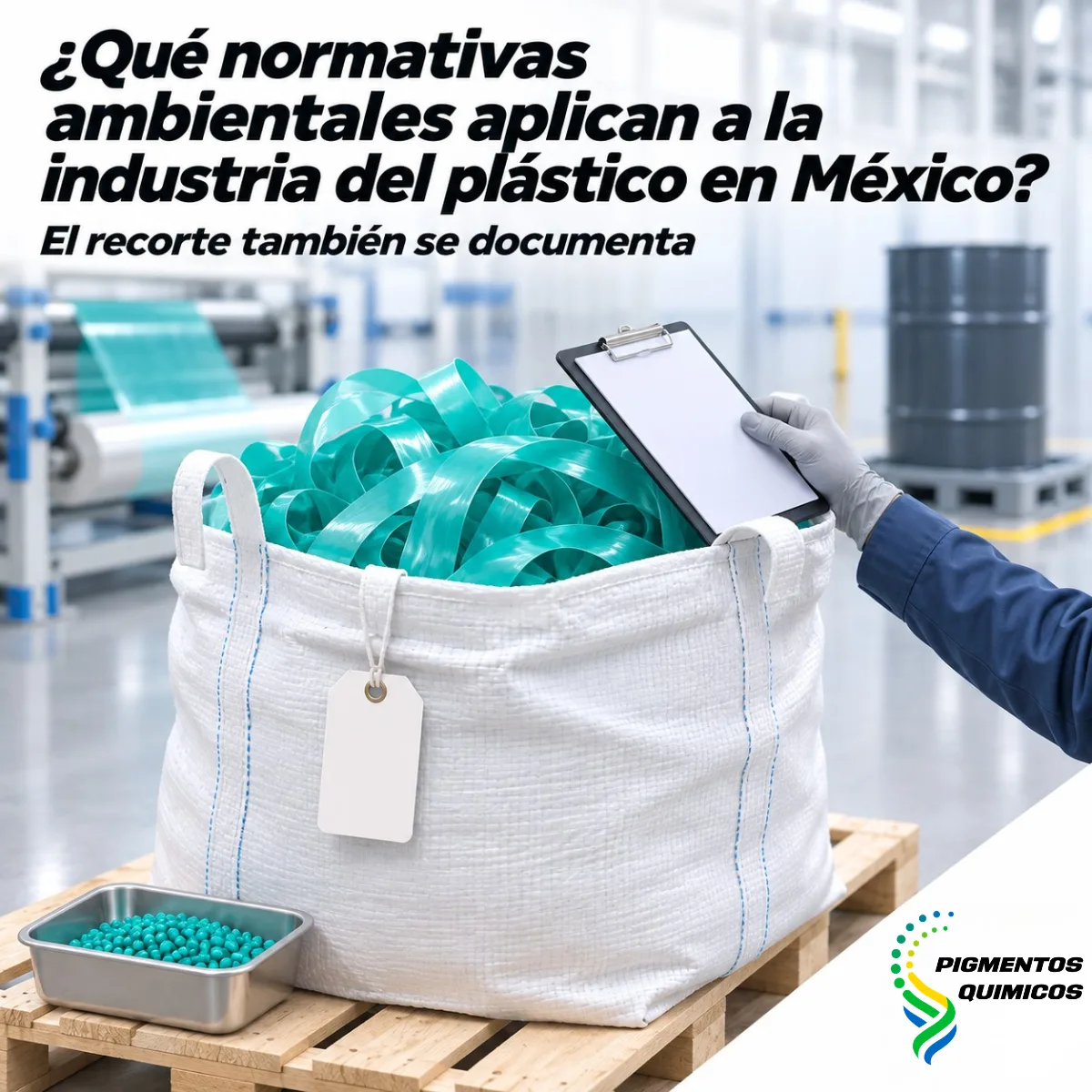
Environmental regulations for plastics in Mexico work in three layers. Waste, emissions and water at the federal level, state single-use laws and labeling rules; color and additives help you comply with several of them.
The federal framework that binds your plant from the first kilo of scrap
Every plant that processes plastic in Mexico operates within a federal framework that starts long before the first part. That framework defines what waste is, who is responsible for it and which records must exist. Knowing it prevents the blank boxes in the questionnaire from the opening.
LGEEPA and LGPGIR as the basis for every obligation
The General Law of Ecological Balance and Environmental Protection (LGEEPA) sets the framework for pollution prevention, environmental impact and the powers of each level of government. The General Law for the Prevention and Comprehensive Management of Waste (LGPGIR) classifies waste as hazardous, special handling or municipal solid waste, and assigns responsibilities to whoever generates it. For a plastics processor, the practical consequence is clear: trim, purge, rejected parts and empty resin bags have a legal category, a responsible party and a documented destination.
NOM-161-SEMARNAT-2011 and the management plan for process scrap
NOM-161-SEMARNAT-2011 sets the criteria for classifying special handling waste and determines which streams require a management plan. Plastics industry waste above the volumes defined by the standard falls into that category. That means registering as a generator with the corresponding authority, preparing a management plan with the origin, quantity and destination of each stream, and keeping a logbook. The trim you sell to a recycler and the purge you send for disposal need that documentary support, with the manifest or invoice for each shipment.
NOM-052-SEMARNAT-2005 and the hazardous waste your plant does have
Clean plastic is not hazardous waste, which is why many plants assume NOM-052-SEMARNAT-2005 does not apply to them. In practice it applies to everything around the process: used hydraulic oil, cleaning solvents, soaked rags and wipes, empty containers of some liquid additives and lamps. These streams are stored in a marked area, in labeled containers, for a defined maximum time, and they leave with an authorized carrier.
Emissions, water and noise in the review of a processing plant
The second layer of the framework covers what leaves the plant through the stack, the drain and the air. The specific obligations depend on your type of business, your size and the state where you operate, but the reference standards repeat from one review to the next.
Environmental license and annual report by jurisdiction
LGEEPA reserves for the federal government the industries it considers higher risk, such as chemicals, petrochemicals, and paints and inks. Most injection, extrusion and blow molding plants fall under the environmental authority of their state or municipality, which issues the environmental operating license and receives the periodic emissions report. If your plant also formulates or reprocesses with chemical processes, confirm with an advisor whether you fall under federal jurisdiction and the Annual Operating Report (Cédula de Operación Anual).
Water discharges and the limits each standard sets
Mold cooling water, equipment washing and the water from recycling systems end up in the sewer or in a body of water. NOM-002-SEMARNAT-1996 sets the pollutant limits for discharges to the municipal sewer, and NOM-001-SEMARNAT-2021 sets them for discharges to national waters and property. A closed cooling loop reduces the discharge, but the water bled from the system still counts. Keep the laboratory analyses and the discharge permit, because they are the first documents the water authority requests.
Perimeter noise and neighbors who file complaints
NOM-081-SEMARNAT-1994 sets the noise limits a fixed source can emit beyond its property line, with different values for day and night. Scrap grinders, compressors and cooling towers are usually the critical points. A single complaint from a neighbor is enough for the authority to take measurements at your perimeter.
The state single-use plastics laws that decide what you can sell
The third layer is the one that hit the processor in the opening. Since 2019, several states have amended their waste laws to restrict or ban bags, straws, cutlery, cups and other single-use plastic products. Mexico City, Jalisco, Oaxaca, Baja California and Querétaro are among them, and each one defined its own product list, deadlines and exceptions.
A product that is legal in one state and banned in the next
A polyethylene carrier bag can be sold without restriction in one state and be banned in another, unless it meets an exception, such as being certified compostable or being reusable above a certain thickness. If you supply a customer with a national footprint, its compliance department will ask you for the evidence state by state.
Claims, symbols and advertising the law considers misleading
The exceptions in those laws usually require the product to be compostable, biodegradable or recyclable, backed by a standard or certification. Printing the word without that support exposes your customer to a misleading advertising complaint before the consumer protection authority and exposes your plant to losing the account. The resin identification symbol, with the number inside the triangle, follows the Mexican standard for plastics identification and helps the recycler sort your part. Every claim and every symbol is checked against the document that supports it before the mold is engraved or the print job is prepared.
What masterbatch and additives solve within this framework
Color and additives work alongside the legal file and decide whether your product can meet what the law and your customer require. Three formulation decisions show up in most audits.
Heavy metal free pigments and color the recycler accepts
Restrictions on lead, cadmium, hexavalent chromium and mercury in packaging materials reach your plant through your customers' specifications, which in turn respond to packaging standards and export rules. A masterbatch formulated with heavy metal free pigments, with a written declaration, closes that box in the questionnaire. Color also determines whether the part gets recovered: light shades and colors that do not contaminate the recycling stream preserve the value of the material.
Additives that let you use recycled resin without losing properties
When the law or the customer requires recycled content, post-consumer resin arrives with a thermal history, moisture and contaminants. An antioxidant package restores the protection the material lost in its first life, a compatibilizer helps when different polyolefins are mixed, and a masterbatch with titanium dioxide or a dark shade offsets the variable base color.
Certified biodegradables and compostables with the color included
State exceptions for compostable products require a certification that covers a complete formulation. If the masterbatch is added after the resin was certified, the claim loses its support, as happened to the processor in the opening. That is why the color for a biodegradable resin is chosen with a compatible carrier and with pigments that meet the limits of the applicable compostability standard, and it is documented as part of the formulation submitted for evaluation.
How we support the file for your color at Pigmentos Químicos
At Pigmentos Químicos we formulate masterbatch, pigments and additives for PE, PP, PS, PC, PET and ABS, and every order ships with a quality certificate, technical data sheet and safety data sheet. When your customer asks for heavy metal free pigments, a color for recycled resin or a formulation for a biodegradable resin, we review the specification with you before quoting and put in writing what the masterbatch complies with.
A custom development starts with a free 1 kg sample so you can validate it on your line, with a minimum order of 100 kg and an estimated lead time of 7 to 10 business days after approval. We operate under an ISO 9001:2015 certified quality management system, with traceability by production lot, which is the same document your customer will ask for in its next questionnaire.
Environmental compliance for a plastics plant is built in three layers: waste, emissions and water at the federal level; restrictions on single-use products in each state; and claims backed by a certificate. Color and additives play a part in all three. At Pigmentos Químicos we document what your masterbatch complies with so that no box in your next questionnaire is left blank. Send us your customer's specification, your resin and your color through our color development page.
Frequently asked questions
Are the trim and purge from my plant special handling waste or hazardous waste?
Clean plastic from trim, purge and rejected parts is special handling waste when it exceeds the volume defined by NOM-161-SEMARNAT-2011, and it requires registration and a management plan. It becomes hazardous only if it is contaminated with oils, solvents or other waste classified under NOM-052-SEMARNAT-2005.
Does my injection molding plant need a federal environmental license?
Most injection, extrusion and blow molding plants fall under the state or municipal environmental authority. Federal jurisdiction applies to businesses that LGEEPA considers higher risk, such as the chemical industry. If your plant formulates or reprocesses with chemical processes, confirm it with an advisor before filing.
Can I print "biodegradable" on a bag if the resin is biodegradable?
Only if you have a current certificate that covers the complete formulation, masterbatch included, and the claim matches the scope of that certificate. The state laws that exempt biodegradable or compostable products require that support, and an unsupported claim can be treated as misleading advertising.
Related articles
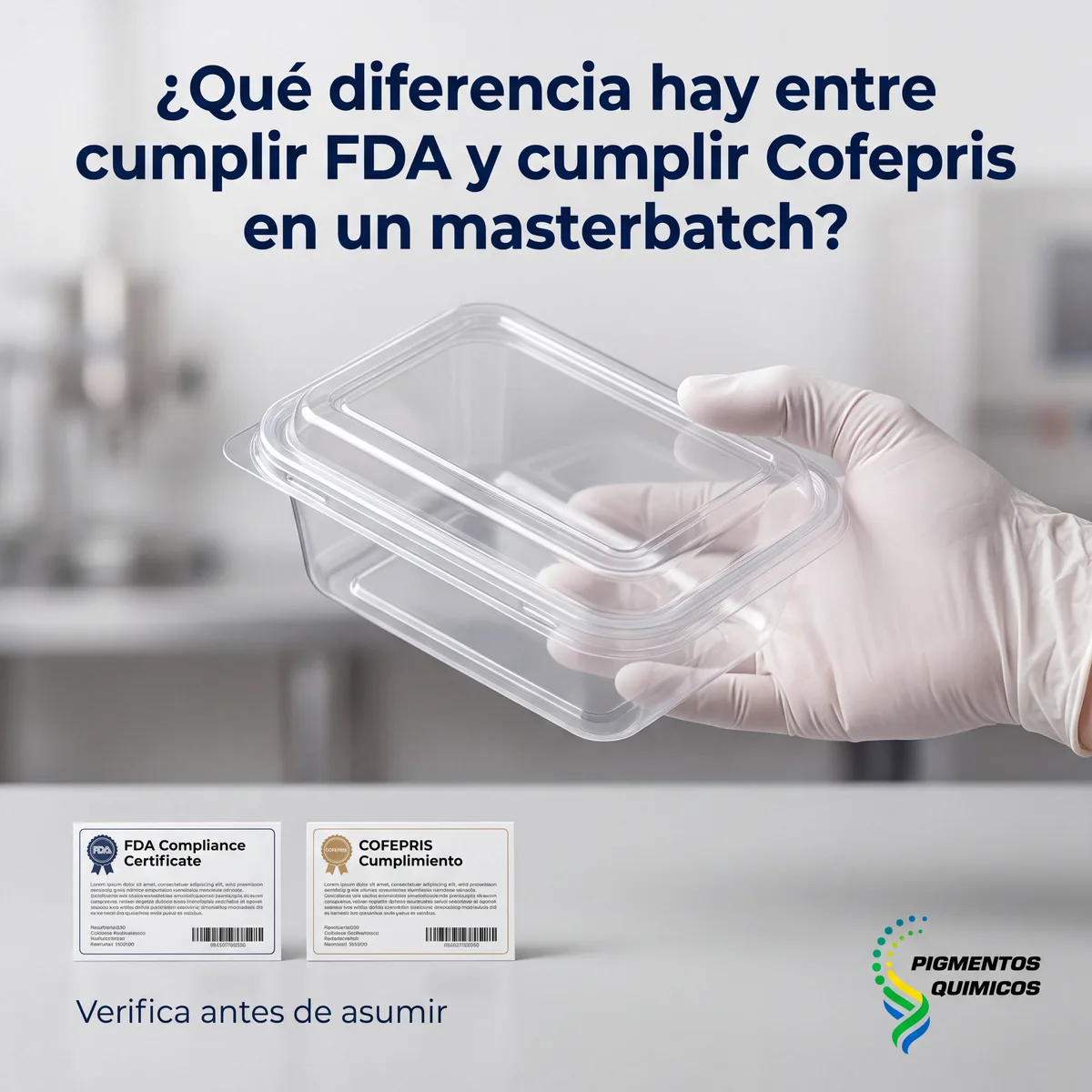
What's the Difference Between FDA and Cofepris Compliance for a Masterbatch?
FDA compliance certifies the additive in the United States. Cofepris demands extra documentation and traceability. A masterbatch can meet one and not the other.
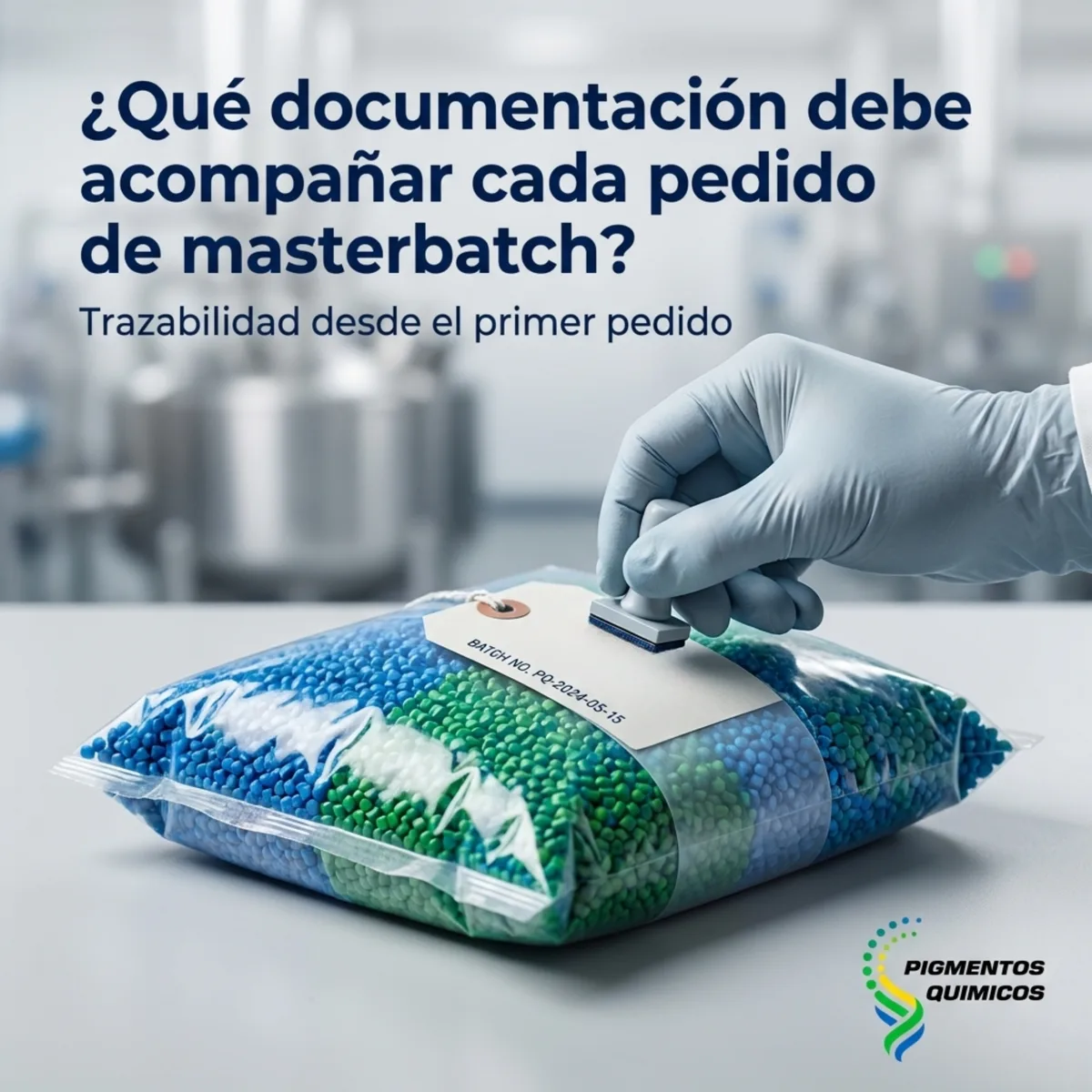
What Documentation Should Accompany Every Masterbatch Order?
A batch with no quality certificate, data sheet, or safety sheet stops your line and complicates any audit. Which documents every order should carry.
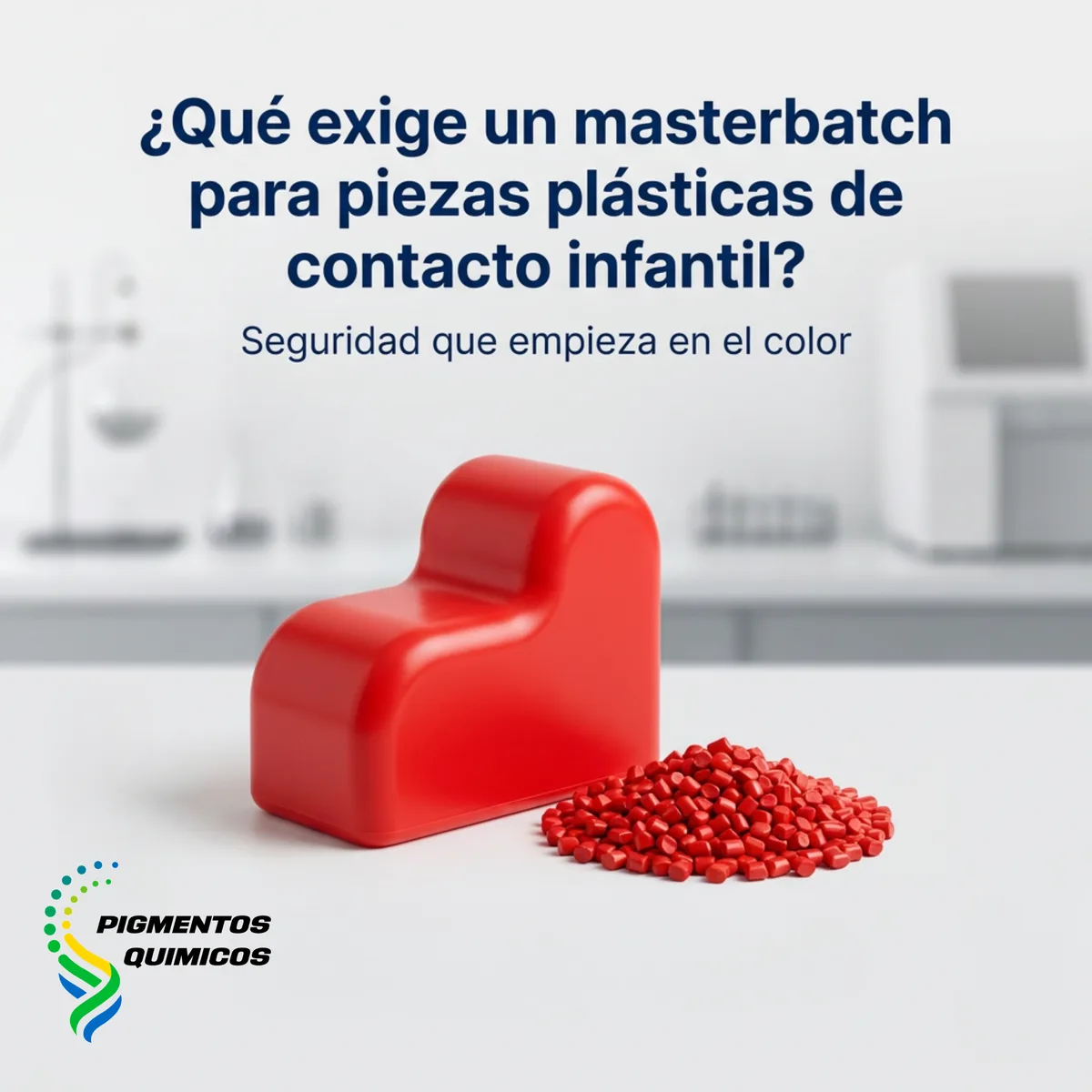
What Does a Masterbatch for Child-Contact Plastic Parts Require?
A masterbatch for child contact must meet heavy metal migration limits and carry its own certification, different from the food contact one.