Metamerism: The Invisible Phenomenon That Ruins Production Batches
Why does color change under different lights? Learn to detect and prevent this critical quality control risk.
Metamerism in the Plastics Industry: The Invisible Phenomenon That Ruins Production Batches
A complete batch of plastic parts comes off the injection line with a color that appears identical to the approved standard. Internal quality control validates it under plant lighting. However, when the end client receives the shipment and inspects it under natural light or in a display environment, the color no longer matches. The result: batch rejection, reprocessing, contractual penalties, and brand reputation damage. This scenario, far from being exceptional, recurs with alarming frequency in the plastics industry and has a precise technical name: metamerism.
What is metamerism and why does it represent a critical risk for plastic production?
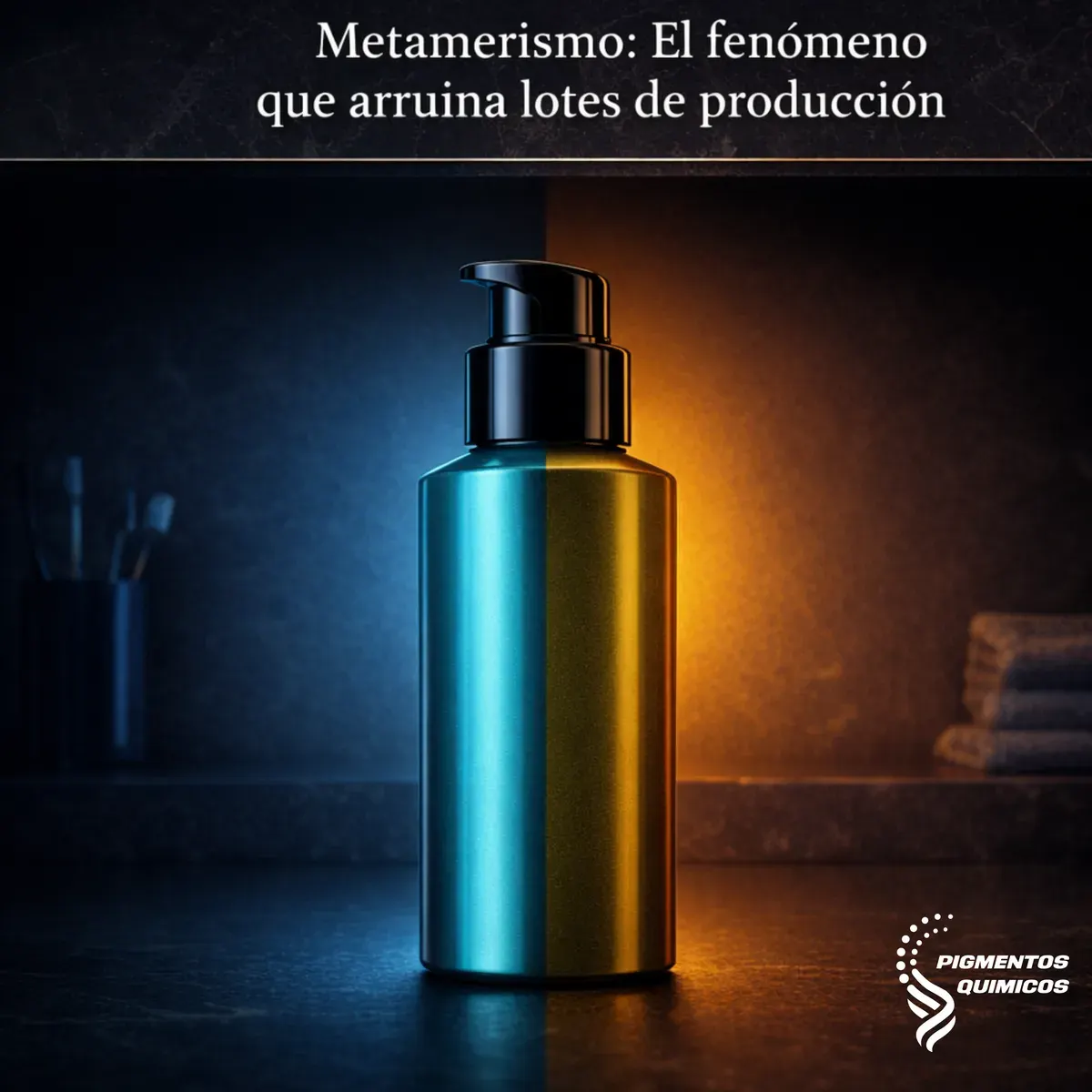
Metamerism is a psychophysical phenomenon in which two color samples appear identical under a given light source but exhibit visible differences when observed under a different illuminant. The underlying cause lies in the fact that the surfaces of both samples have different spectral reflectance curves, even though under certain light conditions they stimulate the three types of cone cells of the human eye equivalently.
In practical terms for the plastics industry, this means that two parts manufactured with different pigment formulations or different masterbatch batches may look exactly the same under the fluorescent lighting of the production plant, but appear noticeably different under the natural light of the point of sale, the incandescent light of a display case, or the LED lighting of an automotive showroom.
The problem is intensified particularly in neutral colors such as grays, whites, and dark tones, where metameric coincidences are more frequent and harder to detect visually.
Types of metamerism that affect plastic production
There are two main categories of metamerism that color professionals must know in order to implement effective prevention strategies:
Why does metamerism occur in plastics manufacturing?
The roots of metamerism in the plastics industry lie in multiple variables of the production process. Understanding each of them allows organizations to design more robust preventive protocols:
Economic and operational impact of uncontrolled metamerism
Metamerism, when not properly managed, generates a chain effect that impacts multiple areas of the operation:
- Complete batch rejections from the client, with associated logistics and reprocessing costs.
- Color reformulation with machine downtime that directly affects operational efficiency (OEE).
- Loss of raw material and energy in production runs that do not meet specifications.
- Deterioration of the commercial relationship with strategic clients and risk of contractual penalties.
- Damage to brand quality perception, especially in consumer products where aesthetics is a differentiating factor.
How to detect and prevent metamerism in plastics production?
Effective metamerism management requires a comprehensive approach combining measurement technology, standardized protocols, and a quality culture. The most effective strategies are presented below:
1. Implement spectrophotometry as a measurement standard
Unlike basic colorimeters, which measure color using red, green, and blue filters imitating human eye perception, a spectrophotometer analyzes the material's reflectance across the entire visible spectrum (400–700 nm). This allows obtaining the complete spectral curve of each sample, which functions as a 'color fingerprint.' With this information, it is possible to identify metameric pairs: samples that look the same under a specific light but whose reflectance curves differ and will therefore look different under another illuminant.
Spectrophotometers allow calculation of ΔE (color difference) under multiple standard illuminants such as D65 (daylight), A (incandescent), and F2/TL84 (fluorescent), facilitating early detection of metameric problems before the batch advances in the supply chain.
2. Evaluate samples in standardized light booths
Light booths provide a controlled environment where each sample is compared to the standard under at least three different light sources. Visual evaluation complements instrumental measurement and allows detection of subtle differences that may not be fully captured in numerical values. This step is essential for final validation before releasing a production batch.
3. Standardize color formulation in the supply chain
The key recommendation to minimize metamerism is to use, wherever possible, the same colorants used to create the original standard when formulating new batches. When this is not feasible — and in industrial practice it frequently is not — color formulation software must be used to calculate the pigment combination with the lowest metamerism index possible. These systems evaluate pigment interaction under multiple illuminants and allow ideal recipes to be stored for future reproductions.
4. Control process variables
Establishing standardized and documented injection, extrusion, or blow molding parameters reduces variability in pigment dispersion within the polymer matrix. Barrel temperature, screw speed, back pressure, and cycle time must be monitored and recorded as part of the chromatic quality assurance protocol.
5. Integrate multidisciplinary collaboration from the design phase
Metamerism prevention is not solely the responsibility of the quality department. Pigment and material selection must involve designers, process engineers, purchasing managers, and masterbatch suppliers from the earliest stages of product development. This early collaboration allows risks to be anticipated and pigment combinations with lower metameric potential to be selected.
Conclusion: Metamerism is prevented, not corrected
Metamerism represents a real and costly challenge in plastic product manufacturing, but it is a phenomenon that can be managed effectively with the right tools, protocols, and organizational culture. Companies that adopt color science and preventive metamerism control not only reduce rejections and operating costs, but build a competitive advantage based on consistency, reliability, and customer satisfaction.
Investment in spectrophotometry, light booths, formulation software, and technical staff training should not be seen as an expense, but as a strategic component of quality assurance that protects profit margins and brand reputation.
Frequently Asked Questions (FAQ)
What is metamerism in plastics?
Metamerism in plastics is the phenomenon by which two parts manufactured with different pigments or masterbatch formulations appear to have the same color under a specific light source but show visible differences when the lighting changes. It is a critical quality control problem in the plastic injection, extrusion, and blow molding industry.
How is metamerism measured in plastics manufacturing?
It is measured using spectrophotometers that analyze the spectral reflectance curve of each sample under multiple illuminants (D65, A, F2/TL84). When the spectral curves of two samples cross at least three times, the existence of a metameric pair is confirmed. The metamerism index and ΔE under different lights quantify the magnitude of the problem.
What is the difference between a colorimeter and a spectrophotometer for detecting metamerism?
A colorimeter measures color based on RGB filters and is useful for quick pass/fail checks, but does not detect metamerism. A spectrophotometer, on the other hand, captures the full reflectance spectrum, which allows comparison of chromatic behavior under different illuminants and identification of metameric pairs before they generate rejections.
What colors are most susceptible to metamerism?
Neutral colors such as grays, whites, beige, and dark tones show the highest susceptibility to metamerism. As colors become more saturated or vivid, the probability of metameric coincidences decreases.
How to prevent metamerism when changing masterbatch supplier?
When changing suppliers, it is recommended to request the spectral reflectance curve of the new formulation, compare it with the original standard under multiple illuminants, and conduct light booth validation tests before approving the first production batch. The use of color formulation software that calculates the metamerism index is highly recommended.